
Lacy Hendricks is the Director of Marketing and Associate Broker at Hendricks Property Management in San Antonio, TX. She’s also a Certified SEOSpace Expert and in 2025 co-founded ClearLead Digital, a website agency for fellow property managers.
Search engine optimization (SEO) has been an essential part of building business websites for decades. It's especially important for local businesses like property management companies. That's why I started ClearLead Digital with Alex Zweydoff. We help property managers get more out of their websites and capture more business.
But as more people turn to AI tools to answer their questions, and traditional search engines like Google start offering AI answers, the SEO process is changing.
In this article, I'll walk through how AI search works, what factors play into how your website performs, and how you can create content that ranks well, gets cited by AI, and creates leads for your company.
How AI search works
What is AI search?
The most popular AI search tools today are all what we call “large language models,” or LLMs. Chances are you’ve heard of at least a few, but the most common LLMs are:
- ChatGPT
- Gemini
- Claude
- Perplexity
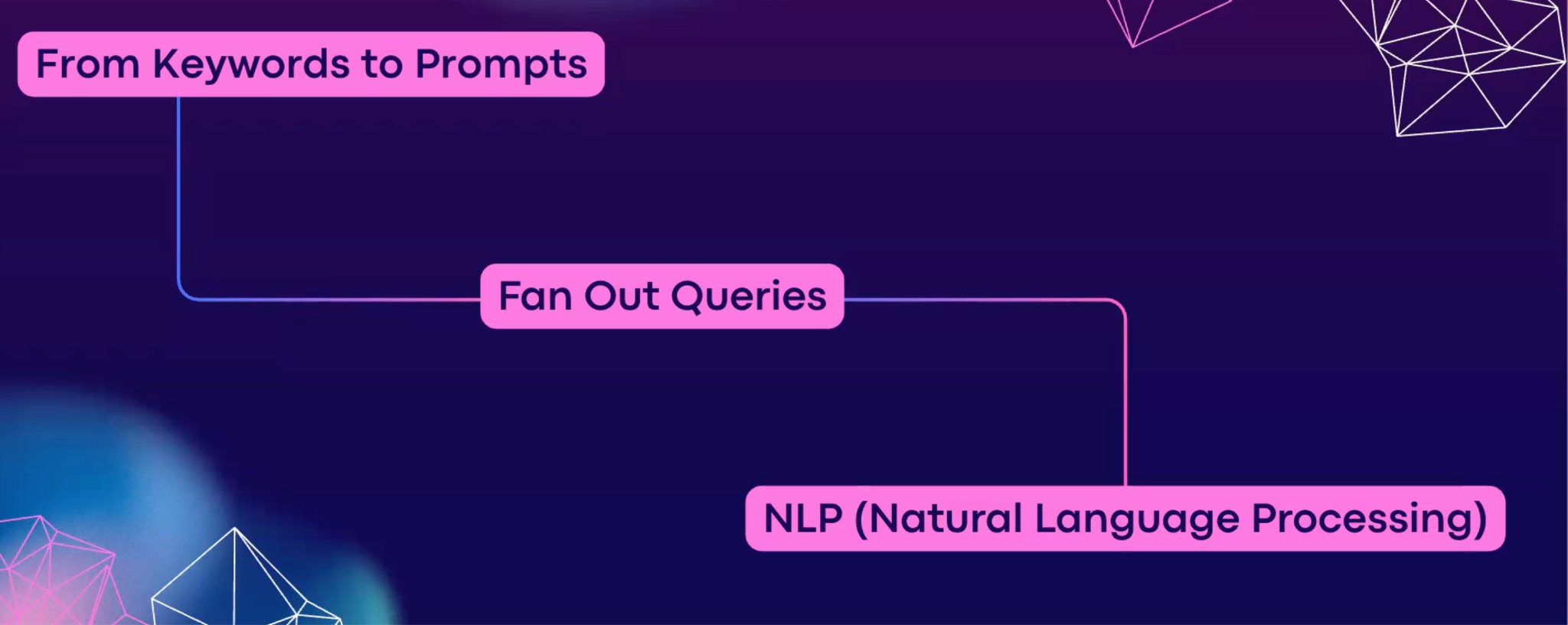
These tools let you ask questions and get full answers in plain, written language. As they get more popular, SEO specialists and business owners are shifting away from targeting keywords and toward targeting prompts. People use these tools to find answers to questions, so we need to create content that answers those questions.
Understanding fan out queries
When you submit a prompt to an LLM, it has to go find the information to put together a full answer for you. Fan-out queries are how LLMs find that information and decide what belongs in the response. They're basically related searches the LLM uses to piece together an answer.
For example, you might ask an LLM, "How often do I need to service an HVAC system for a 2,000 square foot house in Texas?" The LLM would then run a list of fan-out queries like:
- What is the average temperature in Texas?
- What is the right size of HVAC system for a 2,000 square foot home?
- How do temperatures affect the life span of an HVAC system?
- What factors impact the life span of an air conditioning unit?
- What are the standard preventative maintenance tasks for heating systems?
It would then gather all the information to answer those questions (and more) and combine it using a natural language processing model. Natural language processing is how the model puts all that information back together in a way you can read, giving you the written answer you see.
When you create content, your goal is to answer the initial question someone types into an LLM and as many of the fan-out queries as you can.
Updated ranking factors
Just like with traditional search engines, the way AI algorithms rank content is always changing. With multiple LLMs trying to capture the market, they're constantly tweaking the formula to try to be the best. The way ChatGPT ranks content is going to be slightly different from how Gemini does it, for example.
That said, there are some broad factors that affect how your content ranks across LLMs, and they're not too different from the ranking factors used by traditional search engines.
Expertise, experience, authority, and trust
Expertise, experience, authority, and trust (commonly abbreviated E.E.A.T.) is used to measure how reliable your website is as a source of information. In other words, how can you show your expertise and authority online? What makes you a more dependable source than any other website?
To build E.E.A.T., anyone creating content on your website should have an author profile page that shows who they are, why they matter, what their relation is to the company, and why they're an expert. Include a headshot, a short biography, any certifications they hold, and links out to other professional websites or profiles, like LinkedIn or NARPM.
Topical authority
Topical authority is all about how well you cover a subject. This is where those fan-out queries come in. The more of them you answer, the better you've covered the subject. Writing one article on a topic won't cut it anymore. Cover the topic from several angles.
For example, if you're writing about eviction in San Antonio, you might want to write about:
- How long does the eviction process take in San Antonio?
- How do I give notice of eviction in Texas?
- What's the average cost of eviction in San Antonio?
- What are the legal reasons for eviction in Texas?
When you start covering topics in more depth, with consistent, well-structured content, LLMs and search engines start to see you as more of an authority on those topics.
Citations
Citations are all about how the rest of the internet sees your website. This is probably the area where there's the most variation between different LLMs, but here are some of the elements that roll up into citations:
- List mentions: Are you included on trusted lists across the web? Think about the Better Business Bureau, your local Chamber of Commerce, or industry publications. All of these help show LLMs that you're a trustworthy source of information.
- Online reviews: How do customers rate you across sites like Google Business, Facebook, Yelp, and more? Strong reviews help your reputation with prospects and with LLMs.
- Awards, accreditations, and affiliations: If you have industry credentials, like CPM, RMP, or others, make sure you're listing those on your website. LLMs will absolutely notice them and see you as more credible.
- Google web authority: If Google thinks your website is authoritative, so will LLMs. All of the authority factors from traditional SEO still apply, like backlinks and content originality.
- Social sentiment: This looks at how people talk about you on sites like Quora, Reddit, or Instagram, beyond a simple 5-star score. Managing your reputation on those sites can help your other content get cited more often.
Is blogging still relevant?
This is one of the most common questions I get when talking to people about SEO. Blogging has always been an effective way to create content on your website that ranks well in search results and drives people to your site. But in the age of AI, is it still relevant?
The short answer is yes. Your goal now is to train LLMs on who you are and what your brand stands for. Your blog is still one of the best ways to do that.
Look for topics that are relevant to your target audience and your geographic area, and start writing about them. Tackle one topic per article, structure your posts well, and you'll start seeing LLMs cite your website.
The great news about blogging is that, even if you haven't started, that's fine. There's no "too late." You can get started today and still see great results.
Writing high-ranking content
In many ways, writing good content hasn't changed much with the arrival of AI. Most people still use traditional search engines, so AI search just sits on top of traditional SEO. All the core principles of SEO still apply today, including content structure, technical SEO, and more.
Identifying pain point keywords
Pain point keywords are search terms that focus on a problem the searcher needs help with right then and there. A lot of these searches start with "what do I do if…" These queries perform well with LLMs because they get treated a lot like transactional keywords instead of informational ones. Because the user is looking for an immediate solution, LLMs treat it much like someone searching to make a purchase.
Look for topics that solve common pain points in your market and write about those. Frame them with a problem/solution structure that makes sense to both readers and LLMs.
Technical SEO
Technical SEO has always included things like making sure there aren't broken links on your pages, your site loads quickly, and everything works well on mobile.
With AI, technical SEO is more important than ever. We're talking to robots, so sometimes we have to use robot language. That's where schema comes in.
Schema is a script that helps AI agents understand the content of a webpage faster. You can learn more at schema.org, but here are some of the schema types I recommend including on all your blog posts:
- Article
- Person
- Organization
- WebPage
- BreadcrumbList
- FAQ
There are plenty of tools to generate schema, and you can even use ChatGPT. Give it the information about your post and it will format the schema the way you need it. From there, drop it into an HTML code block on your page, and you're good to go. Now LLMs can understand your content faster.
Structuring content
The structure of your content in each article also helps robots understand the information. By using different header styles, you can divide your content into sections so that LLMs and readers can quickly skim and find the most relevant parts.
- H1: This is the title of your article. As a general guideline, the H1 should be between 40 and 60 characters and 5 to 12 words, including your primary keyword.
- There should only be one H1 per page. Having multiple H1s can hurt your ranking.
- H2: These are best used as section titles. They organize large topics within a page, and at least one H2 should contain your primary keyword.
- H3: These are used within H2 content to break up larger sections. Think of them as subsections. If an H2 section is short, you may not need an H3, but if it's long, H3s help with readability.
Here are some other tips for structuring content that will rank well:
- Add a summary at the top or bottom of your content so that both LLMs and people can quickly understand the key points.
- Use bulleted lists where it fits, which makes it more likely that LLMs cite your content.
- Organize information in tables within the page. LLMs read and cite tables very well.
This applies whether you're writing a blog post or any regular page on your site. All of it still counts.
Don’t be intimidated by SEO
SEO is part art and part science, especially in today's AI-focused world. It can seem overwhelming, but you can take it step by step. Perfect is the enemy of good, so even putting a few of these tips in place across your site can help you get noticed in your market.
SEO also creates a flywheel effect. When more people come to your site and spend time there, search engines and LLMs see you as more reliable, so you rank higher.
Start small, find a few topics that are relevant to your market, and start creating clear, insightful content.
For more, watch our full webinar, Maximize your SEO in 2026!
Topics:


 September 24, 2026