
Property management education requirements vary by state, but typically include a combination of high school education, real estate licensing, specialized training courses, and professional certifications.
If you're an independent property manager looking to formalize your credentials, a real estate investor managing your own properties, or a professional operator hiring educated property managers, understanding the education landscape helps you make informed decisions about training and hiring.
This guide covers state-specific licensing rules, educational pathways from certificate programs to bachelor's degrees, the certifications that carry weight in the industry, and how to put your credentials to work managing properties effectively.
Key takeaways
- Requirements vary by state: some require a real estate license, others have property management-specific licenses, and some have no requirements at all
- Educational paths range from high school diploma (entry-level) to bachelor's degrees (senior and executive roles)
- Key certifications: CPM (IREM), CAM (NAA), MPM (NARPM)
- Licensing typically requires 30-90 hours of coursework, passing a state exam, and completing a background check
What property management credentials do you actually need?
There's no universal answer. Property management credentials fall into three categories, and which ones apply to you depends on your state and career goals.
Licensing is the legal requirement to practice property management in your state. Some states require a full real estate broker or salesperson license, others have separate property management licenses, and some states have no licensing requirements at all.
Education is the formal training that gives you foundational knowledge. Entry-level positions typically require a high school diploma, while senior roles at larger management companies often require a bachelor's degree in real estate, business, or a related field.
Certification refers to professional credentials that prove expertise and open doors to higher-paying positions. These are typically voluntary but highly valued by employers and property owners.
Understand what your state legally requires before investing in education, then figure out which certifications will move your career forward.
State-specific licensing requirements
Requirements vary significantly by state. Before enrolling in any program, verify your state's current requirements through your state's real estate commission or regulatory board.
- States requiring real estate licenses: Many states require an active real estate broker or salesperson license. You'll complete 30-90 hours of state-mandated coursework, pass the real estate licensing exam, and maintain your license through continuing education.
- States with separate property management credentials: Some states have distinct property management licenses with coursework, exams, and renewal requirements tailored specifically to property management rather than general real estate sales.
- States with minimal or no requirements: Several states have few or no formal licensing requirements, though employers and property owners may still prefer certified managers.
Find your state's specific requirements by searching "[your state] property management license requirements" or visiting your state's real estate regulatory agency website.
Educational pathways for property managers
Once you understand your state's licensing requirements, you can choose the training and courses that fit your career goals and timeline.
High school diploma (entry-level minimum)
A high school diploma or GED is the baseline for entering property management. With this credential, you can access entry-level positions like leasing consultant, assistant property manager, or administrative roles at property management companies. Many successful property managers started here and built their careers through on-the-job experience combined with professional certifications.
Associate degrees in property management or business
Two-year associate degree programs cover property management principles, business administration, accounting, and real estate law. You'll study lease administration, resident relations, property maintenance coordination, and basic financial analysis. These programs often include internship opportunities that provide hands-on experience before you graduate.
Bachelor's degrees for senior positions
A four-year bachelor's degree in real estate, business administration, or a related field opens doors to senior property management positions, regional manager roles, and executive opportunities. Employers managing large portfolios or commercial properties often require or strongly prefer candidates with bachelor's degrees.
Certificate programs for focused training
If you want to enter the field quickly or add specific skills, certificate programs offer compressed training in weeks or months. These programs focus on essential property management skills without general education requirements. Penn Foster offers a property management certificate program, and UC San Diego Extension provides property management courses through their continuing education division.
Professional certifications that set you apart
Education and licensing get you into the field. Professional certifications demonstrate expertise and often lead to higher compensation. Consider adding the following credentials based on where you want to take your career.
Certified Property Manager (CPM)
The CPM designation from the Institute of Real Estate Management (IREM) is the most prestigious credential in property management. Requirements include 36 months (three years) of qualifying real estate management experience, completion of eight required IREM courses covering ethics, financial management, marketing, human resources, and asset management, plus passing the CPM certification exam. Over 50% of CPM holders work in senior management or executive positions.
Certified Apartment Manager (CAM)
The CAM certification from the National Apartment Association focuses specifically on multifamily property management. Requirements include 12 months of onsite property management experience (which you can complete while taking the courses), 40 hours of coursework across seven modules, and passing a 185-question certification exam. The program covers market analysis, property maintenance, and financial management specific to apartment communities.
Master Property Manager (MPM) and other credentials
The MPM designation from the National Association of Residential Property Managers (NARPM) is the organization's highest individual credential. To qualify, you must first earn the Residential Management Professional (RMP) designation, manage at least 500 units over five years, complete 24 hours of NARPM education, and hold a real estate license for at least five years (if your state requires licensure).
Other valuable credentials include Fair Housing certifications, Certified Occupancy Specialist for affordable housing, Accredited Residential Manager (ARM) from IREM, and software-specific certifications for platforms like Yardi, AppFolio, and RealPage.
How to become a licensed property manager
If your state requires licensing, here's the typical path from application to active license:
- Research state-specific requirements. Visit your state's real estate commission website or contact them directly. Requirements change periodically, so verify the latest information rather than relying on third-party summaries.
- Complete prerequisite education courses. Enroll in state-approved pre-licensing courses. Most states require 30-90 hours of instruction covering real estate law, contracts, property management practices, and ethics.
- Submit your application and complete a background check. Fill out the licensing application, pay the required fees, and submit to fingerprinting and background checks. Processing times vary but typically take 2-6 weeks.
- Schedule and pass the licensing exam. Once approved, schedule your licensing examination. The test covers real estate law, regulations, and property management practices specific to your state. Study guides and practice exams are usually available through your state's testing vendor.
- Activate and maintain your license. After passing the exam, complete any final paperwork and pay activation fees. Most states require continuing education (typically 10-20 hours every 1-2 years) to maintain your license.
From certification to your first 90 days as a property manager
You've completed your coursework, passed your exams, and earned your credentials. You're ready to apply everything you learned about resident relations, financial management, and property operations.
But what often happens in those first 90 days is you get buried in administrative tasks that have nothing to do with strategic property management. Your day fills up with tracking filter replacements, chasing renters' insurance certificates, coordinating pest control calls, and managing utility setup for new move-ins. According to industry research on resident experience management, these operational tasks consume significant time that could be spent on higher-value work.
You're juggling communication across scattered systems instead of building the resident relationships and optimizing the operations your education prepared you for. The challenge is balancing day-to-day tasks with strategic priorities like resident retention and investor ROI.
This administrative burden isn't unique to new property managers. Experienced professionals deal with it too. Recurring operational tasks consume hours each week, pulling you away from the strategic work that grows portfolios and builds your reputation.
How Second Nature eliminates the administrative burden
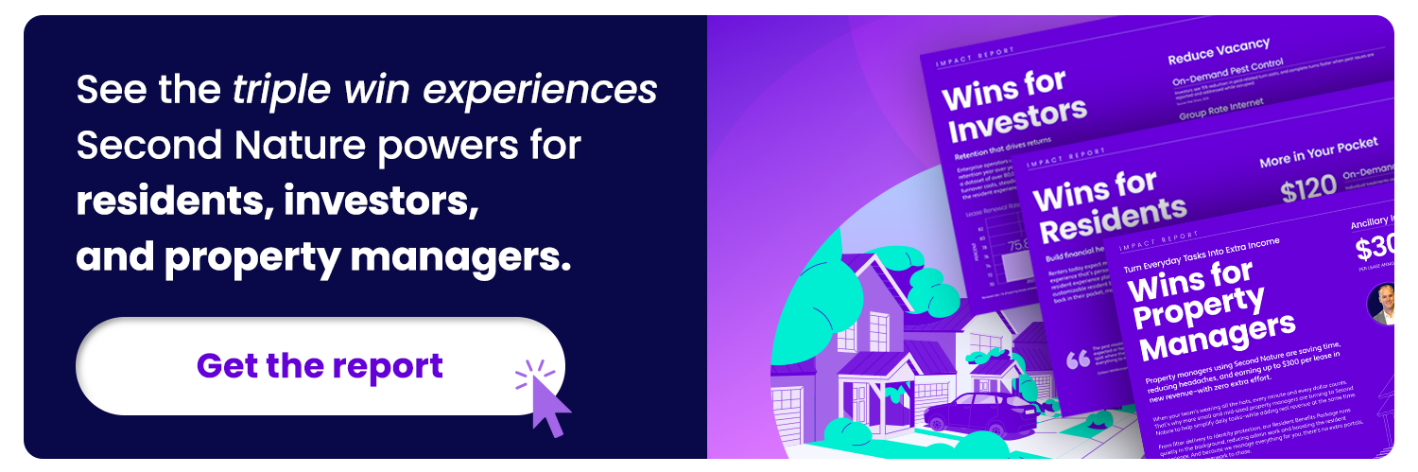
Second Nature is a resident experience platform that handles the programs your team would otherwise manage manually. The platform automates air filter delivery, renters insurance verification, pest control coordination, and move-in support through concierge services, so you can focus on property performance and resident satisfaction.
Our Resident Benefits Package also includes value-adds that improve the resident experience: credit building through rent payment reporting, resident rewards for on-time payments, and identity protection with up to $1 million in coverage. Research shows that filter delivery alone reduces HVAC maintenance requests by 38%.
What makes it different:
- It's a revenue-generating amenity with success-based pricing (no upfront costs)
- White-labeled to your brand
- Trusted by 2,500+ property management companies delivering over 2 million resident experiences
Second Nature integrates directly with AppFolio, Rentvine, RealPage and more, so there's no new system to learn.
Your education prepared you for strategic property management. Second Nature lets you actually do that work instead of tracking filters and chasing insurance certificates. Learn more about what’s included in a Resident Benefits Package.
You didn't spend months studying financial analysis and resident relations to become an air filter coordinator.
Request a demo. See how Second Nature handles it.


 March 24, 2026