
In the property management world, Virtual Assistants (VAs) and Remote Team Members (RTMs) come up in conversation often. Some managers rave about the cost savings and efficiency, while others remain skeptical.
For clarity, when I use the term “remote staff,” I’m referring to hiring talent from other countries. Yes, you can absolutely have remote staff based here in the U.S., but the hot debate in our industry is really about outsourcing internationally—primarily for lower labor costs—and whether it’s a smart move for your business and operations.
That’s where the divide happens. On one side, there are those who see international RTMs as a game-changer. On the other hand, those who believe the trade-offs outweigh the benefits. And then there’s the group in the middle—where I find myself—people who understand and appreciate both sides but haven’t yet made the leap to hire an RTM.
In this issue, we’ll explore the upside, the downside, and my own personal thoughts.
The upside
The most obvious benefit is lower labor costs. Hiring RTMs can provide significant savings compared to in-office employees, especially when outsourcing tasks such as admin work, leasing support, or maintenance coordination. Many PMs report that once the systems are in place, their RTMs are just as productive as in-office staff.
Other benefits include:
- Scalability: Easier to grow the team quickly without high overhead.
- Time Efficiency: Delegating repetitive tasks frees up local staff to focus on higher-value work.
- Talent Access: Tapping into a global talent pool opens doors to specialized skill sets.
A friend of mine in property management hired her first RTM to handle maintenance calls. She was nervous at first—would residents notice? Would it feel impersonal? But within a month, she realized her residents didn’t mind at all, and she freed up nearly 20 hours a week for her local staff to focus on leasing and owner communication. For her, it was a win.
The downside
It’s not always smooth sailing. Hiring internationally can feel daunting—you’re placing a lot of trust in someone you’ve never met in person, who may be thousands of miles away. Add in the challenges of language differences and time zone gaps, and it’s easy to see why some managers hesitate. The most common hurdles include:
- Culture Integration: Building a strong, unified company culture can be harder when part of the team works across borders and time zones.
- Language Barriers: Even with strong English skills, subtle communication differences can affect clarity and resident/owner interactions.
- Time Zone Conflicts: Depending on where your RTMs are located, real-time collaboration can be limited.
- Supervision & Training: Onboarding and oversight often require extra structure and processes.
Another PM I know hired a team overseas, excited about the savings—but one by one, they didn’t last. Some stayed only a week, others a month or two. She also faced inconsistent communication, difficulty reaching them, and lack of accountability. Of course, these issues can happen with local staff too, which is why the key is holding international hires to the same standards, providing proper training, and checking in regularly.
My perspective
At Milestone, we’ve explored both sides of the conversation. While I recognize the value of RTMs and have spoken with countless PMs and vendors who absolutely rave about them, I’ve chosen a different path.
I value the office culture for many reasons, but one of the biggest is the separation it creates between work and home—a key piece of work/life balance. Our office has its own vibe, and my team genuinely enjoys being here. That said, I do have two staff members who work remotely, though in our case “remote” means they still live locally. They can easily come into the office, join team meetings, or meet up for lunch. For me, there’s real value in building an in-office culture where collaboration and connection happen face-to-face.
That doesn’t mean the RTM model is wrong—it simply comes down to what works best for your business. For some, RTMs are a game-changer. For others, local teams make the most sense.
Poll: what about you?
We’d love to hear where you stand.
👉 Do you have or prefer using RTMs, or do you prefer not to hire RTMs?
- I currently have RTMs and love them
- I’m considering RTMs but haven’t made the leap
- I prefer in-office/local staff only
Join our community to take the poll and see what your peers are saying.
 Until next time!
Brandy Landon
Broker/Owner
This week's must-sees
All things property management in the news these past two weeks:
-
DoorLoop announced a new AI assistant to help with invoices, task management, maintenance, and more.
-
Forbes has a new piece on why independent landlords are on the rise—and why it's more difficult than people expect without professional management.
-
Nearly 20% of mortgages now have rates above 6%, the highest since 2015. As buyers adjust to the new normal, will we start to see a reduction in owners renting out properties instead of selling?
Tripe Win of the week
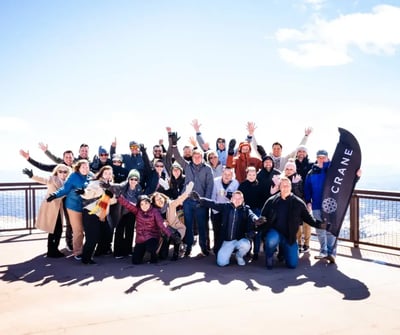
Crane has opened applications for new members! The deadline to apply is October 10th. Don't miss your chance to join a dedicated mastermind community with exclusive resources, content, and events.
New from Second Nature
-
Peter Lohmann joined the podcast last week to talk about everything from Zillow to AI to churn rates, and why surrounding yourself with a PM community is key to success.
-
Melissa Gillispie from JWB made a return to the Second Nature blog with two new pieces: How JWB developed their HomeStep homebuyer program, and why they hired a dedicated resident experience coordinator.
One last thought
NARPM Nationals is just a couple of weeks away! Don't miss out on Second Nature's VIP program, including an exclusive magical afterparty.
Register before it's too late!

Stay triple winning,
💜 The Second Nature team

 August 26, 2026