
Blog_Page_Hero-3

Triple Win Property Management Blog

Resident Experience Management Guide to Utilize Platform to Meet Expectations

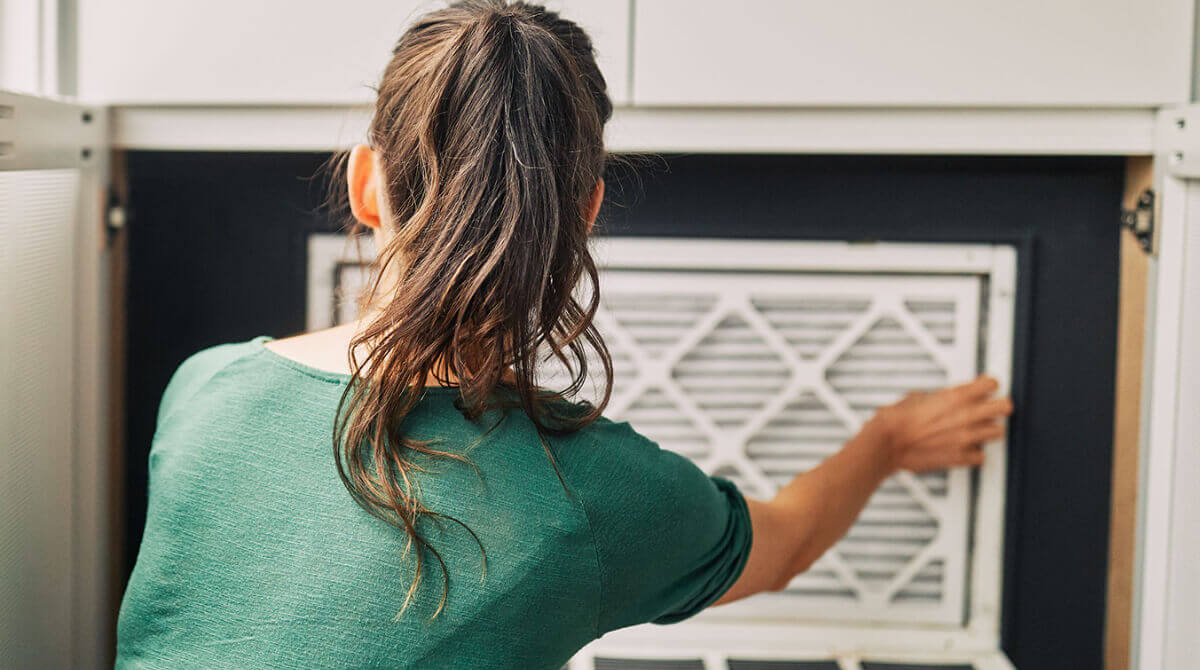
Resident experience management is improving every resident touchpoint – from application to move-out – to drive an experience so good your residents never want to leave. Today, the role of the property manager is to proactively identify and meet residents’ needs, often before the resident knows they need it. It’s a new world, but it’s exciting, allowing enterprising PMs to stand out in a crowded industry. Solutions that drive value, like a resident benefits package or an investor benefits package, are taking the lead. At Second Nature, we build tools with those enterprising property managers leading the way, and we’ve put together a report on the latest trends and innovations in the space. In this article, we’re diving deep into how to improve the resident experience, why it matters, and the best practices in resident experience right now. For more details and insights from leading PMs, check out the 2024 State of Resident Experience Report. Why is Resident Experience Important? Related: State of Resident Experience Study The “experience economy” has changed both customer and resident expectations. Particularly after the pandemic, the modern consumer is accustomed to the ease of apps like Uber, Airbnb, and Amazon, and they respond to ease and convenience. The question that single-family and multifamily PMCs are asking now isn’t “What’s the most I can get out of residents for the least I can do?” Rather, it's: “How do I create an experience so good that residents never want to leave?” Property management companies are redefining resident experiences to improve occupancy rates and help residents, investors, and their companies get a win. Investing in resident experience management strategies is one of the most direct ways to yield a positive ROI and reduce resident turnover costs. According to DD Lee, owner of Skyline Properties Group in Atlanta: “The number one thing (our residents) look for is ease and convenience. They don't want complicated instructions. They just want simple; they want right now. They want contact-free; they don't want to talk to people. So everything we do, from showings to moving into the experience after they move in is all revolved around design for that expectation.” Related: How to Write a Noise Complaint Letter to Tenant How to improve resident experience management Resident experience management is about identifying every unique touchpoint along the resident’s journey – from application to move-out. Property managers are now expected to make each touchpoint painless and convenient. Our 2024 State of Resident Experience Report discusses changing consumer expectations and the key steps to resident satisfaction. Here, let’s expand on each key resident touchpoint where PMs can focus on improvement. Move-in Move-in is the perfect opportunity to design experiences that make new residents say, “Wow” – to make them feel delighted, welcome, and truly at home. Our guide explores some of the best innovations for cultivating a unique move-in experience. One of the best is to offer a Resident Benefits Package (RBP) that folds in services like a move-in concierge, insurance, incentives, and more. Rent payments Offering online rent payments is table stakes these days. Great property managers have to go beyond that. Second Nature’s RBP has a credit-building service that reports on-time payments to every credit bureau, giving value to residents and helping them become more financially stable. Another service is the resident rewards program, which incentivizes on-time payments and supports great residents. Maintenance requests Using an online resident portal for real-time maintenance requests has become a baseline expectation. PMs are going beyond that to ensure they use preventative maintenance and deploying strategies to improve functionality. One such resident experience strategy is an air filter delivery service. Changing filters on time can reduce HVAC requests by 38%, saving the property manager and investor hundreds of dollars a year. Pet registration Property managers can proactively offer pet registrations or guarantees and even use that as a form of ancillary income. You get the extra pet fees to drive income, the investor gets an assurance that they won’t suffer because of pet damage, and the resident gets to keep their pet! Resident concierge services Concierge services are a top way to provide a VIP experience. Second Nature’s RBP includes a move-in concierge who can confidently guide multiple people daily to set up their utilities properly. Residents don’t have to deal with the headache of setting up new utilities – instead, in one phone call, they find out their best options and can even get help simplifying setup. Renewal process PMs can proactively set up the renewal process, so it’s as easy for the resident as a click of a button. Assuming each touchpoint along the way has anticipated and delivered on residents’ needs – and surpassed their expectations – lease renewal should be straightforward and quick. Resident communication Property managers aiming to improve the resident experience have found creative ways to improve and streamline resident communication. Effective communication is necessary, whether through digital apps and automation, social media, on-site messaging, proactive team members, etc. Move out When a resident is moving out – whether they chose to move or are delinquent – property managers can help make the process as smooth as possible. Anticipating the resident’s needs, keeping communication open, and deploying motivated team members all help deliver the final touch for most residents. The move-out experience is their last impression and can impact your referrals, reputation, etc. What property managers can do using Resident Experience Platform Resident retention is a key success metric in the current economic climate. Keeping residents engaged and happy can go a long way to delivering a triple win: hitting your goals, their goals, and your investor’s goals. Our State of Resident Experience Report explores how resident experience management can deliver ROI, company growth, and happier investors. We also talk to several experts in the property management field to hear their best and most successful ideas. Here are a few key activities the resident experience platform enables you to improve the experience that residents will pay for and stay for. Post-maintenance surveys and follow-ups Quick complaint responses and preventive maintenance Pet-friendly property management and insurance Resident engagement programs like a recycling drive, helping minimize waste productions, sourcing local, etc. Prioritizing safety and security and engaging residents in a proactive way to achieve that Each of these strategies can be executed with the help of a resident experience management platform and helps deliver what “totally taken care of” feels like, which is exactly what residents are looking for. Resident experience management tips: how to handle difficult residents Every property manager we’ve talked to has dealt with difficult residents at some point in their career. The best property management strategies prevent many of these issues through better resident experiences. The right strategy can help incentivize residents to cooperate, keep a property well-maintained, and make on-time payments. When you are facing a difficult resident situation, here’s how leading property managers advise proceeding. Make sure service promises are fulfilled One of the most important things that sets professional PMs apart from hobbyists or amateur landlords is the delivery of promises. Because you have a team and a plan, you can ensure that what you promise is what residents get. Being courteous, kind, and professional A lot of this is about hiring the right people. Get your core values in place and ensure that anyone you hire is bought in on those values. Finding people that the rest of your team enjoys working with is also important. Cultivating an environment of courtesy and respect goes a long way to ensuring residents are treated fairly. By not taking it personally Improving the resident living experience is all about seeing the human at the other end. When unhappy or troublesome residents aren’t taken personally, it puts us in a better position to take reasonable, effective steps to deal with them. Professional PMs can approach challenging situations without judgment but with clear boundaries and proactive solutions. Delegating This comes back to having the right team in place. If you trust your team, you can delegate specific complex tasks to them without spending all your time on every issue. Peter Lohmann, CEO of RL Property Management, shared that he keeps a delegation cheat sheet printed out at his desk. The steps to successfully delegating are: Outline the vision - “Commander’s Intent.” Share resources. Describe your definition of done. Give a deadline or interval. Explain how and when they should keep you updated. Having paperwork to back your arguments Ensuring you have documentation of each issue with the resident is critical. Documenting interactions along the way helps protect you and your team. Setting and maintaining expectations Again, professional PMs know that setting and managing expectations is one of the top priorities for a happy and successful resident relationship. Knowing that today’s residents expect a certain level of convenience can put professional PMs ahead of the game. Utilizing resident experience platforms like Second Nature to meet expectations We’ve only scratched the surface of resident experience management and the innovative and exciting ways we’ve seen property managers change the game in that space. The next step might be to explore our Resident Benefits Package and why property managers love it. Or, if you’d like to learn more about property management trends for 2024 – and the changing state of resident experience – you can download our free State of Resident Experience Report. The in-depth report includes advice and insights from some of the most innovative property managers in the biz, data on resident expectations, and key trends for 2024. Resident experience management FAQs What is resident experience management? Resident experience management is the process of improving every touchpoint in a renter’s journey—from application to move-out. It helps property managers boost satisfaction, reduce resident turnover, and increase retention by making living simpler, more convenient, and more engaging. Why is resident experience important for property managers? Resident experience directly impacts occupancy rates, renewal decisions, and overall ROI. When property managers prioritize ease, communication, and comfort, residents stay longer, pay on time, and recommend the community to others. How does resident experience management reduce resident turnover? By addressing resident expectations—like online rent payments, responsive maintenance, and clear communication—property managers create an environment where residents feel valued. This reduces frustration, increases loyalty, and lowers costly turnover. What role does property technology play in resident experience management? Technology makes it possible to streamline operations and meet modern expectations. Resident portals, mobile apps, and automated systems for rent payments, maintenance requests, and communication improve efficiency while giving residents more convenience. How can property managers improve resident satisfaction? Key strategies include: Offering easy online rent payment options Providing proactive and responsive maintenance Hosting events to build a feeling of belonging and sense of community Communicating clearly and effectively Delivering concierge-style services that anticipate resident needs What are examples of resident experience platforms? Resident experience platforms provide tools to manage communication, payments, maintenance, and engagement in one place. These platforms help property managers deliver seamless service, keep residents informed, and track satisfaction metrics. How does resident experience management benefit property owners? For property owners, strong resident experience management translates to higher occupancy, lower turnover costs, and more predictable cash flow. Happy residents mean fewer vacancies, stronger reviews, and better long-term asset performance.

Calendar icon September 5, 2025

Read more
Benefits of Outsourcing Property Management Services

Property management services have changed by leaps and bounds over the past 5-10 years. And property management outsourcing services have grown along with it. While the traditional approach to property management simply provided the basics – maintenance, rent collection, etc. – entrepreneurial PMs saw a massive gap in that value proposition and have transformed the real estate industry. Now, property management services are increasingly seen as a way to generate value for residents, real estate investors, and property management companies. PMCs are delivering resident benefits like credit reporting, renter’s insurance programs, pet guarantees, and more. And each of these services acts as a value add for everyone involved. But that can also add extra burden and cost to your property management business when your team is already spread thin. One of the best ways to offer value without overextending your team is to outsource some of those PM services to PropTech products, contractors, or a fully managed solution. Today we’re going to talk about this option in more detail. Whether you’re just getting started in property management or a seasoned pro, we hope you’ll find something here to help. Key Learning Objectives: What is outsourced property management? What services add the most value to the resident experience? What property management services are most easily outsourced? What are the costs associated with outsourcing PM services? What are the benefits of outsourcing PM services? What is Outsourced Property Management? Outsourced property management refers to the practice of paying for a third-party company or product to handle certain tasks or operations for your property management company. This could include tasks such as tenant screening, resident benefits, renters insurance programs, rent collection, maintenance and repair coordination, lease enforcement, financial reporting, and more. Property management is, in itself, an outsourced service for real estate investors/property owners. Just as property owners often choose to outsource their property management to save time, reduce stress, and ensure they stay profitable – property management companies may outsource several of their services for the same reasons. Property management outsourcing services, whether PropTech products or fully managed solutions, allow property management companies to build efficiencies and focus on quality and growth. Outsourcing certain services can give residents more of what they need and investors more value for their dollar. What Services Can Property Management Companies Outsource? Advances in technology and innovation within the property management industry have given PMCs greater flexibility in terms of outsourcing key services. As a property manager, you may outsource for a range of reasons. Maybe you’re still building up your team and need cost-effective expertise in a certain area. Maybe you have core products you want to focus on and want certain services to take less of your time. Maybe your investors or residents are asking for out-of-scope services that you can offer for an additional fee. Overall, outsourced property management services can help PMCs save time, reduce stress, and maximize the profitability of their company. So, what are some of the most commonly outsourced property management services? They can be grouped into a few categories: A single-family property management software and integrations that enable all kinds of business operations. Maintenance and repair. Many PMs outsource things like plumbing, HVAC, and other contractor work. Resident benefits and ancillary services. Property managers often outsource value-driving products like an RBP and other services that investors want, and residents will pay for. Let’s dig into the services that might be included within each of those larger categories. Rent collection Third-party payment processing companies can handle the actual collection and processing of rent payments for the PMC. The property management company will provide the payment processing company with the necessary information and details about the residents and the property, including lease terms, payment due dates, and amounts owed. The process may involve various payment methods, such as online payments, credit card payments, ACH transfers, or other payment options. Some popular outsourcing solutions that help collect rent include Buildium, Propertyware, and AppFolio. Second Nature provides a fully managed service that helps ensure your residents pay rent on time. Repair and maintenance Many PMCs outsource repairs and property maintenance. We’ve spoken with experts like Bob Preston, who run their own maintenance companies separately as another source of income and an added value to their clients. When a property management company outsources repair and maintenance, it typically involves hiring third-party contractors or service providers to handle the actual repair, upkeep, and maintenance tasks required for the property. Outsourcing repair and maintenance can offer several benefits for property management companies. You can access a broader range of specialized skills and high-quality expertise, which may not be available in-house, and save time and resources by avoiding the need to recruit and manage in-house staff to handle repair and maintenance tasks. Marketing and advertising Marketing isn’t everyone’s strong suit, and that’s okay! When a property management company outsources marketing and advertising, it typically involves hiring a third-party marketing or advertising agency to handle the promotion and advertising of the rental properties. The agency will work closely with the PMC to develop a comprehensive marketing strategy that aligns with the property's unique selling points and target audience. The marketing agency may use a variety of advertising channels and mediums to promote the property, including social media marketing, search engine marketing, online advertising, email marketing, print advertising, and other marketing channels. They may also create engaging content and visuals, such as videos, images, and virtual tours, to showcase the property's features and amenities. Legal Most PMCs outsource their legal services to a third-party law firm or attorney to provide legal advice and representation on various matters related to the property or properties. Legal services that may be outsourced can include lease agreements, evictions, compliance with local and federal laws and regulations, dispute resolution, and other legal matters that may arise in the course of managing the property. Outsourcing legal services helps minimize legal risks and liabilities, ensure compliance with applicable laws and regulations, and protect the property investor’s interests. Accounts and finance Many PMCs outsource to an accounting firm or financial service provider to handle the financial management and reporting. The outsourced firm will work with you to manage financial records, provide financial reporting, and ensure compliance with accounting standards and regulations. Accounting and financial services that may be outsourced can include bookkeeping, financial statement preparation, tax planning and compliance, budgeting and forecasting, and other financial reporting and analysis. Overall, outsourcing accounts and finance can help property management companies to operate more effectively and efficiently and achieve their financial objectives while minimizing financial risks. Insurance PMCs often work with a third-party insurance broker or agent to provide insurance coverage and manage insurance-related issues for the property or properties. The insurance coverage that may be outsourced can include property insurance, liability insurance, workers' compensation insurance, and other types of insurance coverage that may be necessary or recommended for the property. Another way to outsource insurance is to find a service that provides a renters insurance program like Second Nature’s. Ensuring that residents have insurance coverage is a priority for 90% of property managers, but only 41% of residents maintain compliant coverage. At Second Nature, our renters insurance program has 100% compliance. You can learn more about our coverage and fully managed Resident Benefits Package in our 2023 Resident Experience Report. Safety and security Many PMCs outsource to a security company to provide safety and security services. The security company will work closely with the property management company to assess safety and security needs, design and implement safety and security protocols, and provide safety and security personnel and equipment as needed. Security services that may be outsourced can include security personnel, security systems and equipment, safety training and education, emergency response planning and execution, and other safety and security-related services. Costs of Outsourcing Property Management Services? The cost for a PMC to outsource some property management services can vary depending on a number of factors, such as the scope of services required, the complexity of the work, the location of the service provider, and the level of expertise required. Some service providers may charge a flat fee, while others may charge an hourly rate or a percentage of the property's rental income. The cost of outsourcing property management services can range from as low as $1 per property per month to as much as hundreds of thousands of dollars annually, depending on whether it’s a full-service tech solution, simple maintenance services, a Resident Benefits Package, etc. It's important to note that while outsourcing property management services can come with a cost, it can also provide benefits such as increased efficiency, reduced workload, and access to specialized expertise. Before outsourcing any services, it's important to carefully consider the potential costs and benefits and to choose a service provider that offers high-quality services at a reasonable price. Benefits of Outsourced Property Management Services Outsourcing property management services can have a massive impact on your return on investment per door and per client. Outsourcing also helps with scaling when you can’t afford to run every service in-house. With the ability to outsource, you can offer more value to your clients without skyrocketing your operating costs. You can also drive secondary sources of revenue through outsourcing. Not convinced? Let’s go over some of the real-life benefits we’ve seen PMCs leverage with outsourcing select services. Cost savings Outsourcing property management services can save property management companies significant costs associated with hiring and managing in-house staff, as well as investing in technology and infrastructure. Outsourcing can also help to minimize overhead costs, such as office space, equipment, and supplies. Let’s think even bigger. Outsourcing value-generating services like a Resident Benefits Package has multiple benefits: boosting resident satisfaction, incentivizing on-time payments, and reducing vacancy rates. Talk about a cost-saving win! Increased efficiency We’ve seen PMCs use outsourcing to streamline their operations, reduce administrative property management tasks, and increase productivity. This can free up time and resources for property management companies to focus on core business functions and strategic planning. Instead of using your own team for time-consuming tasks, you can outsource them. Access to expertise Outsourcing property management services allows PMCs to access specialized expertise and skills that may not be available in-house. This can include legal, accounting, marketing, and maintenance expertise, among others. Outsourcing can also provide access to the latest technology and software, which can improve efficiency and effectiveness. Better risk management Property management inherently involves risk. You’re managing people’s lives on the one hand (residents) and investments on the other (owners/investors). Outsourcing can help better manage risks associated with property management, such as legal liabilities, compliance issues, and safety and security concerns. This can help protect your company from financial and reputational damage. Improved resident satisfaction You can more seamlessly and reliably improve resident satisfaction by providing better maintenance and repair services, more efficient rent collection, and faster response times to tenant concerns and requests. This can help to increase tenant retention and attract new tenants. Higher employee satisfaction Outsourcing services to a third party is a direct way to impact your employees’ satisfaction. How? Outsourcing helps reduce workload, gives access to better training and development, improves working conditions, and provides a better work-life balance. Often, outsourcing means that your employees get to focus on the core functions that they love instead of getting bogged down in tasks they don’t love or don’t feel equipped for. Factors to Consider When Outsourcing Property Management Back Office Services Selecting the right property management outsourcing services provider is a crucial decision that can significantly impact the efficiency, profitability, and overall success of your property management operations. Here are key factors to consider: 1. Range of services Evaluate the range of services provided by the outsourcing company. Check to make sure they offer the specific services you need, such as rent collection, maintenance, legal support, marketing, financial management, and resident benefits. A comprehensive provider can handle multiple aspects of property management, which can streamline your operations. 2. Industry experience Look for a provider with extensive experience in property management and a proven track record of success. They should have expertise in the specific types of properties you manage, whether residential, commercial, or mixed-use. Experienced providers are more likely to understand industry-specific challenges and deliver effective solutions for various situations. 3. Reputation Research the provider’s reputation within the industry. Check online reviews, testimonials, and case studies to gauge client satisfaction. A provider with positive feedback and strong references is more likely to deliver high-quality services. 4. Cost Evaluate the cost structure of the provider’s services. Compare their fees with the value they offer, as well as review how they bundle these services. While cost is an important factor, it’s essential to consider the overall value and benefits the provider brings to your property management operations. The goal is to achieve a balance between cost-effectiveness and high-quality service. 5. Customer service Effective communication is vital to successful outsourcing. Assess the provider’s responsiveness, transparency, and customer service quality. They should offer multiple channels for communication, ideally with a main point of contact, and provide timely updates on important matters. 6. Technology and innovation Assess the technology and software solutions the provider uses. Advanced property management software can enhance efficiency, improve communication, and provide valuable insights. Ensure the provider leverages the latest technology to offer seamless and efficient services. 7. Compliance and legal expertise Ensure the provider is well-versed in local, state, and federal regulations related to property management. They should be able to navigate legal complexities and ensure compliance with all relevant laws. This reduces the risk of legal issues and ensures smooth operations. How Thousands of PMCs Are Outsourcing Services for Better Resident Experiences Property management companies are always looking for new ways to generate value for themselves, their residents, and their investors. One of the quickest ways to scale and increase return on investment is to outsource property management services. At Second Nature, we’ve pioneered the first-ever fully managed Resident Benefits Package in order to support PMCs with just that goal. Our RBP provides services that residents are proven to pay and stay for – and our team manages every part of the process so property managers can focus on strategy, growth, or work-life balance. We’ve helped thousands of property managers transform their services and their operations with a customized RBP providing services they couldn’t do alone. Our goal is to make property management easier for PMs, residents, and investors – and drive value that benefits all three. We call it the Triple Win.

Calendar icon October 2, 2024

Read more

Property Management Outsourcing Services: Example Tasks & Best Providers

Virtual assistants are becoming increasingly important in the property management industry for a number of reasons. First are the associated efficiencies. Property managers often wear many hats, juggling tasks like resident communication, lease agreements, maintenance requests, and advertising. A virtual assistant can handle many of these administrative and repetitive tasks, freeing up the property manager's time to focus on more strategic initiatives. Virtual assistants can also act as a communication "hub" between residents, property management companies, and service providers. They can field calls and emails, schedule appointments, and ensure everyone is on the same page. In the same vein, virtual assistants can help with tasks related to online advertising for vacancies, managing a social media presence to attract potential residents, and even creating basic property videos or photos for listings. It’s important to note that virtual assistants are not a replacement for in-house staff. Instead, they allow staff to focus on important tasks that add value, as opposed to time-consuming manual operations. In today's post, we'll provide concrete examples of how virtual assistants can help property managers, the pros and cons of using these services, and a brief directory of property management virtual assistant service providers. Note on language: In the interest of clear communication, particularly regarding legal matters, this blog post may occasionally use the term "tenant" in reference to residents. While "resident" reflects the valued community we aim to support, service provider agreements and other legal documents today typically use the term "tenant." For the majority of this post, however, we'll utilize the term "resident" to best represent the positive and collaborative atmosphere we aim to cultivate. What is outsourced property management? Outsourced property management refers to the practice of paying for a third-party company or product to handle certain tasks or operations for your property management company. This could include tasks such as tenant screening, resident benefits, renters insurance programs, rent collection, maintenance and repair coordination, lease enforcement, financial reporting, and more. Related: Benefits of Property Management Outsourcing Services Property management is in itself an outsourced service for real estate investors/property owners. Just as property owners often choose to outsource their property management to save time, reduce stress, and ensure they stay profitable – property management companies may outsource several of their services for the same reasons. Property management outsourcing services, whether PropTech products or fully managed solutions, allow property management companies to build efficiencies and focus on quality and growth. Outsourcing certain services can give residents more of what they need and investors more value for their dollar. Example property management tasks you can outsource to virtual assistants The number of tasks property managers can outsource has increased over time, as companies have become more comfortable with geographically dispersed teams, and as virtual assistants themselves have become more sophisticated (better communication skills, task automation capabilities, and access to information). Given that the benefits of outsourcing to virtual assistants are on the rise, here is a sampling of tasks that can currently be outsourced to virtual assistants. Outreach to homeowners for management Virtual assistants can be a property management company's secret weapon for improving homeowner outreach in a few key ways. Given that property managers often manage a large number of properties and homeowners, virtual assistants can handle sending personalized emails, texts, or even making phone calls to homeowners. As indicated above, they can also help manage the property management company's social media presence, posting updates, building trust, and boosting its brand presence to property owners. Property assessments While virtual assistants can't directly conduct rental property assessments, which typically involve a qualified professional inspecting the property's condition, they can provide valuable support throughout the assessment process by gathering and organizing property information crucial for the assessment (for example, details such as square footage, number of bedrooms/bathrooms, year built, major renovations, and past maintenance upkeep records). They can also compile relevant data from property management software or online real estate industry resources. Virtual assistants can also manage the scheduling of property assessors and ensure clear communication between the property owner, property manager, and the assessor. This involves sending appointment reminders, handling any cancellations or rescheduling needs, and keeping everyone informed throughout the process. Once any given assessment is complete, a virtual assistant can help process and organize the assessor's report. This might involve formatting the report, creating digital copies, and ensuring it's easily accessible to the property manager and owner. Creating and presenting management proposals Virtual assistants can be a highly cost-effective asset to property management companies when it comes to creating and presenting management proposals. For instance, virtual assistants can save a lot of time by gathering data on comparable properties in the area, including rental rates, vacancy rates, and recent sales. They can pull this data from industry reports, rental listing websites, or public property records. They can also compile details about specific rental properties under management such as square footage, amenities, maintenance history, and any unique features. This ensures the proposal accurately reflects the property's value and the services offered. In addition, virtual assistants can alleviate the hassle of creating or maintaining templates for management proposals, ensuring consistency in branding and formatting. This saves time and ensures a professional presentation. As far as actual proposal presentation is concerned, virtual assistants can handle the electronic delivery of the proposal to the client and schedule follow-up calls or meetings to discuss the proposal details and answer any questions. If the property manager is competing against other companies, a virtual assistant can help research competitor offerings and identify areas where your proposal can stand out. Determining property rent In addition to the market research capabilities mentioned above, virtual assistants can gather data on rental trends in the target area. This includes vacancy rates, as well as recent rental listings for comparable properties (similar size, bedrooms, amenities) and their advertised rent prices. They can find this information on rental listing websites, property management software, or public rental databases. Virtual assistants can also handle initial communication with investors to understand their rental expectations and any specific goals they might have (e.g., maximizing rent vs. filling the vacancy quickly). Creating and organizing property photos and marketing material Virtual assistants can be a game-changer for property management businesses when it comes to creating and organizing property photos and marketing materials. If professional photography is required, a virtual assistant can schedule appointments with photographers, and even perform basic photo editing tasks like cropping, and adjusting brightness and contrast. This ensures a clean and polished presentation of the property. They can also create file-naming conventions for these photos, in order to make them easily searchable for future use in marketing materials or listings. As far as marketing materials are concerned, virtual assistants can create or maintain templates for various materials, ensuring consistent branding and design across all platforms. This saves time and creates a professional look while delivering cost savings. Advertising the property Virtual assistants can be highly beneficial for property management companies when it comes to advertising their properties. For instance, virtual assistants can create and manage listings on various online rental platforms, ensuring accurate and up-to-date property information reaches a wide audience of potential tenants. They can also optimize listings with relevant keywords to improve search ranking. On the social media channel, virtual assistants can help create targeted ads with eye-catching visuals and compelling descriptions highlighting the property's best features. They can also schedule ad posts and track their performance to optimize future campaigns. In general, virtual assistants can create and manage a content calendar for property promotions. This can include scheduling social media posts, email blasts to potential residents, or even blog posts showcasing the property and surrounding neighborhood. Responding to inquiries Virtual assistants can be the first point of contact for prospective tenants who inquire about a property through listings, social media, or the company website. They can answer basic questions, schedule viewings, and qualify leads to ensure they are a good fit for the property. Likewise, when it comes to responding to inquiries from potential investors, they can assess the lead quality and guide the initial conversation. Vetting resident applications Virtual assistants can be a valuable asset in the vetting process for property management companies. For starters, they can handle the initial processing of rental applications, collecting and organizing applicant information, as well as lease agreements and supporting documents. This frees up property managers to focus on reviewing qualified applications. They can also manage initial communication with applicants. This might involve sending automated emails with application instructions, answering basic questions about the property or application process, and scheduling appointments for viewings. Many property management companies use tenant screening software that virtual assistants can be trained to utilize, ordering credit reports, background checks, and eviction history reports efficiently. Approving a tenant application after review Virtual assistants can play a crucial role in streamlining the post-review approval process for property management companies. Once the property manager approves an applicant, they can handle initial communication with the new resident. This might sending a lease agreement electronically, explaining signing procedures, and collecting e-signatures. Virtual assistants can also coordinate move-in logistics, such as scheduling move-in property inspections, providing information on utility activation, and sending welcome packages with important building information and resident resources. Lease preparation Virtual assistants can help to streamline the process of lease preparation while minimizing the potential for errors. At a minimum, they can gather essential information from the approved application and property details to populate lease templates. This might include resident names, contact details, leasing terms, rent amounts, and security deposit details. Many property management companies use pre-defined lease templates with standard clauses outlining They can then handle initial communication with the approved resident about lease signing. This might involve sending the lease electronically, explaining signing procedures, and answering basic questions about lease terms and conditions. resident responsibilities, maintenance procedures, and lease termination processes. Virtual assistants can ensure these clauses are included in the lease agreement. They can also review completed lease agreements for any typos, inconsistencies, or missing information before sending them to the resident for review and signature. Lease renewals Virtual assistants can also help streamline the process of lease renewal, thereby helping to increase resident retention. For example, virtual assistants can monitor lease agreements and identify upcoming lease expirations. They can then create a timeline for initiating communication with residents about potential renewals, via personalized emails or letters to residents approaching the end of their lease term. These messages can express appreciation for their residency, highlight the benefits of renewing, and outline the renewal process. Virtual assistants can also track resident responses to renewal offers, flagging those requiring further discussion with the property manager. They can also generate reports on renewal rates, providing valuable data for analyzing resident retention strategies. Running tenant background checks While virtual assistants can't legally conduct background checks themselves, they can be a valuable asset in streamlining the process for property management companies. This might include managing the initial steps of collecting and organizing applicant information crucial for background checks. This includes details like full names, Social Security numbers (with applicant consent), and previous addresses. They can also help maintain standardized forms with clear instructions for applicants regarding background check consent. This ensures applicants understand the process and provide the necessary authorization for releasing information to background check companies. Organizing tenant records Virtual assistants can be instrumental in bringing order to record-keeping processes, from data entry and management to record-keeping and accessibility. They can handle the initial data entry of resident information from applications, including names, contact details, emergency contacts, lease details, and pet information. This ensures all crucial information is captured and readily accessible. Virtual assistants can upload and organize various tenant documents electronically. This might include lease agreements, signed addendums, rental history verifications, and maintenance request records. They can also create a filing system for easy retrieval of documents when needed. Note that virtual assistants should be trained on data security and privacy regulations to ensure the confidentiality of resident information – while virtual assistants can manage record-keeping tasks, the property manager should maintain oversight and ensure compliance with data protection laws. Invoicing and accounting Virtual assistants can handle a range of tasks related to recording rent payments, managing maintenance expenses, and categorizing various property management costs For example, virtual assistants can help set up secure online payment portals for residents to easily submit rent payments electronically. On the tracking side, virtual assistants can track incoming payments, reconcile bank statements, and ensure accurate records are maintained. Virtual assistants can then generate basic financial reports for the property manager, summarizing expenses and overall property income. This allows for better financial tracking and informed decision-making. Many property management companies utilize accounting software. Virtual assistants can be trained to use these platforms, automating tasks like data entry and simplifying record-keeping. Best property management virtual assistant services providers Identifying the "best" virtual assistant service provider will of course depend on your specific needs and budget. First, we'd recommend that you determine the specific tasks you want your virtual assistant to handle (e.g., advertising, resident communication, bookkeeping), then conduct research on different providers, and compare their services offered, pricing structures, and experience with property management. Also look to online reviews and ask potential providers questions about their screening processes, and data security measures. We're highlighting a couple of providers below that focus exclusively on property management, as well as a short list of solutions that include property management in their overall focus. Virtual Property Management Solutions VPM Solutions is a platform designed specifically to connect property management and real estate businesses with virtual assistants. Learn more Purple Powered Virtual Assistant Purple Powered Virtual Assistant (PPVA) specializes in providing virtual assistants specifically catered to the property management industry. They focus on connecting property management companies with qualified VAs as well as ensuring those VAs have the necessary skills to excel in the role. Learn more Honorable mentions Virtudesk Virtudesk specializes in virtual assistants for various industries, including property management. They offer a proven track record and a focus on quality service. Learn more MyOutDesk Known for their expertise in real estate and property management, MyOutDesk offers virtual assistants with experience in tasks relevant to the field. Learn more Wishup This company boasts a user-friendly platform, offers flexible pricing plans, and has a quick onboarding process for virtual assistants. Learn more Pros and cons of using property management virtual assistants Overall, virtual assistants can be a valuable asset for property management companies, boosting profitability, resident satisfaction, and business growth. However, careful vetting, clear communication, and training are necessary to mitigate potential downsides related to quality control, local regulations, legal issues, and retention. Pros of using virtual assistants in property management Increased profitability Virtual assistants can handle tasks like advertising and resident communication, freeing up property managers to focus on maximizing rental income and minimizing vacancies. Improved tenant satisfaction Virtual assistants can ensure timely responses to new tenant inquiries and manage resident portals, leading to a more responsive and efficient experience for residents. Streamlined bookkeeping and reporting Virtual assistants can assist with bookkeeping tasks and help generate accurate financial reports, allowing for better financial management. Support for business growth Virtual assistants can handle administrative tasks and marketing efforts, reducing the overhead costs of executing this work, and freeing up property managers to focus on growing their business and taking on new clients. Cons of using virtual assistants in property management Quality control challenges Ensuring the quality of services provided by virtual assistants can be tricky, especially for complex tasks like legal compliance or resident screening. Potential legal issues Data security and privacy become a concern when sharing property information with virtual assistants. Clear contracts and data security measures are crucial. Retention challenges Finding and retaining qualified virtual assistants can be difficult, especially for specialized tasks within property management. Maintaining resident satisfaction Reliance on virtual assistants for initial communication with residents might lead to impersonal interactions, potentially impacting satisfaction. Limited expertise Virtual assistants may not have in-depth knowledge of property management regulations or local real estate market nuances compared to experienced property managers. How PMCs are outsourcing services for better resident experiences Property management companies are always looking for new ways to generate value for themselves, their residents, and their investors. One of the quickest ways to scale and increase return on investment can be through property management service outsourcing. At Second Nature, we’ve pioneered the first-ever fully managed Resident Benefits Package. The goal is to make property management easier for PMs, residents, and investors – and drive value that benefits all three. We call it the Triple Win. Our RBP provides services that residents are proven to pay and stay for – and our team manages every part of the process so property managers can focus on what's important to them.

Calendar icon April 29, 2024

Read more

Property Management FAQs about Resident Experience

Resident expectations are changing. In today’s “experience economy,” residents and consumers alike are looking for experiences that make them feel taken care of, bring more ease into their lives, and set businesses apart. With these changes in mind, property management companies are developing innovative strategies to build better resident experiences – experiences residents will pay and stay for. Today we’re sharing a Q&A about the resident experience with Melissa Gillispie, the Director of Leasing & Property Management at JWB Real Estate Capital. Here’s what you’ll find in the article. ‍ Key Learning Objectives: Core tenants of resident experience Steps to improve resident experience How improving resident experience can save money for property managers Resident experience examples that have worked Resident experience examples that haven’t worked How to monitor resident experience Meet the Expert: Melissa Gillispie, Director of Leasing & Property Management at JWB Real Estate Capital Melissa started her career with JWB in 2013 and is currently the Director of Property Management. She is the licensed real estate broker for JWB and plays an integral role that has led JWB to manage over 4,900 single-family homes in Jacksonville FL, being the largest local rental management company in Northeast FL. Under her purview, JWB has delivered over 26 million dollars in cash flow to its current clients through exceptional management services. Melissa also sits on the Board for NARPM Northeast FL as the Membership Co-Chair. She won the 2022 NARPM Rocky Maxwell award for dedicated service and contribution to NARPM. She is married to her husband of 14 years and has three sons aged 11, 9, and 6. When she is not working, she can be found at the football and soccer fields cheering her sons on! Why should property managers pay attention to the resident experience? What steps can property managers take to improve the resident experience? Happy residents stay longer, take better care of the home, and provide better long-term stability and return on investment for clients. They also spread the good word locally and refer more renters to you. And happy residents are usually nicer, leading to happier staff! Residents (and customers in general) are increasingly driven by instant gratification. They expect immediate communication, results, and benefit. Due to this, we have to increase our speed to outcome for them and set great expectations so that we can "under promise and over deliver" – one of our JWB core values! Some key steps to improving resident experience include: A great lease signing experience with impeccable expectation setting. If everyone knows from day one, who is responsible for what, we can avoid tough conversations down the road. Timely communication. Knowing the type of communication each resident prefers. We have a field in our system called "preferred contact method" – if it is via phone, pick up the phone. If it is text, text away. It helps the resident feel like you're willing to customize their experience. Answer the phone! Like any place open for business, you need to be reachable during office hours. Solve their maintenance issues. Make it easy for them to report those issues to you. If I had to give just one: Clear communication is EVERYTHING. Clear expectations, timely responses, and thoughtful and respectful interactions make us a professional industry vs. a mom-and-pop one. How can improving the resident experience save property managers money? Do you recommend hiring a dedicated resident experience specialist, resident manager, or separate team? Improved experience saves TIME. Time is money. Fewer tough conversations, supervisor calls, upset people impacting employee satisfaction, etc. Great experience leads to retention, which saves money and increases revenue for the business. I think the idea of a dedicated specialist or team is great in theory, but many places want to scale back on staffing (employees are expensive!). I also think that putting the responsibility on one person/group of people in the organization is a mistake to some degree. This limits creativity and reach. At JWB, our approach is that it is every teammate’s responsibility to dedicate effort and time to a great client/resident experience. This allows a wide range of ideas to generate and gives the feeling of impact and satisfaction to every teammate for their contribution. Do you recommend using software or tools to help improve resident retention? Here are some of the best tools we’ve used. Automation: Implementing things that don't require a ton of person-hours will allow you to scale your business at a lower cost. The automation/technology investment is worth it in the long run. The Resident Benefits Package (RBP) by Second Nature: DO IT! Find a mail fulfillment house in your city and rely on them to send mass communications via snail mail. Partner with local businesses for discount codes. Text Magic and Call Fire are great automation tools for communication via phone and text. What are examples of resident experience initiatives that have proved effective? On the flip side, what doesn’t work? Residents need to see the value in any initiative. Knowing your audience/clientele and what matters most to them is important. Is it time savings? Money saving? RBP from Second Nature has been a game-changer. It meets a real need and serves a purpose. We also do a monthly resident newsletter. We send out automatic happy birthday emails to every resident on their birthday (we have been able to automate this completely, so 0 time for staff and 100% feel-good for residents). We do "get to know your city" marketing for new residents with mural maps, restaurants and grocery stores near them, etc. We include a magnet at move-in on their fridge with our contact information and after-hours information. These all create moments that show care and concern, and we sprinkle in love for our city. When you miss the mark on providing value or miss the need the resident actually has, that experience moment may fall flat. So we constantly focus on who our residents are and what will fill their cups. How do you monitor or measure the resident experience? We love surveys! We have maintenance and resident net promoter score (NPS) surveys. Every time a work order closes, the resident receives a survey to give feedback on the experience. We review that weekly. For positive surveys, we ask for reviews. Supervisors reach out for low scores to see how we can improve. For the NPS surveys: If they leave a high score, we ask for a positive review on one of our online platforms (Google, Facebook, BBB). If they leave a low score, supervisors seek feedback to improve. The key is DOING SOMETHING with the information you receive; otherwise, there is no value. Don't just let a low score come through and then do nothing. Reaching out shows the resident you pay attention, value the feedback, and want to improve. Reviews online are also a good way to gauge experience. Take those with a grain of salt, however. People are much more likely to leave a bad review than a good one, so it is a lot of work to win here! We ask for positive reviews anytime we have a great interaction with a resident – a phone call where we solve a problem, an email where they say thank you, or anytime someone pays on time or renews their lease – we ask. You don't get positive reviews you don't ask for! How do you use the information you receive in resident feedback or surveys? There is value to it. You can gather a lot of good information and start to identify trends in the data. We can pinpoint areas as a team to improve and celebrate the things we do well. I do think you have to take some of the responses with a grain of salt. You can't make everyone happy even when you try. View it as information to help make decisions vs. the end-all-be-all to measure your worth as a company. We survey on maintenance every time a work order closes, and we get about a 3-5% completion rate. For the NPS surveys, we survey 60 days after move-in and then every six months. We get a 10% completion rate on those. What questions should you ask if you are considering a resident experience survey? What’s a good sample size for a survey? Are there other tips and tricks to keep in mind? For our NPS survey, it is one question: “How likely are you to refer your friends and family to rent from us?” They score us 1-10, and then we allow an open text response field that is optional if they have more to say. For the maintenance surveys, we ask: “On a scale of 1-5, how satisfied were you with 1. the work order submission process; 2. Your maintenance coordinator, 3. The vendor who performed the work, 4. The amount of time it took to complete the work; 5. The overall experience?” Each star scale also allows for open-text responses (again, not required). I think a good sample size is when at least ¼ of your customers have had the opportunity to review. Until that point, the results seem to be all over the place. We track results monthly, quarterly, and annually, as well as by the property manager and maintenance coordinator, work order category, and property type (multi-family, single-family, condo, townhome, etc.). All of this helps us put together a comprehensive picture of where we stack up against ourselves over time. I think it is important to benchmark against yourself. Each business runs in a unique way, so I get less caught up in how other people are doing compared to me and more caught up in how I am doing compared to myself/my business three, six, or 12 months prior. Perspective is important when you are being vulnerable and asking for feedback! Easily Manage and Improving Resident Experience With Second Nature RBP As Melissa mentioned, the Resident Benefits Package (RBP) by Second Nature goes a long way to creating premier resident experiences. And as the country’s only fully managed RBP, it doesn’t take up your team’s time or bandwidth. We designed the RBP to solve headaches for property managers and help them deliver world-class resident experiences that delight residents and build long-term retention. Happy residents = happy clients = happy PMC teams. A triple win! At Second Nature, we’re all about building experiences that residents will pay for and stay for.

Calendar icon June 28, 2023

Read more

Tips for an Efficient Home: Change Your Air Filter

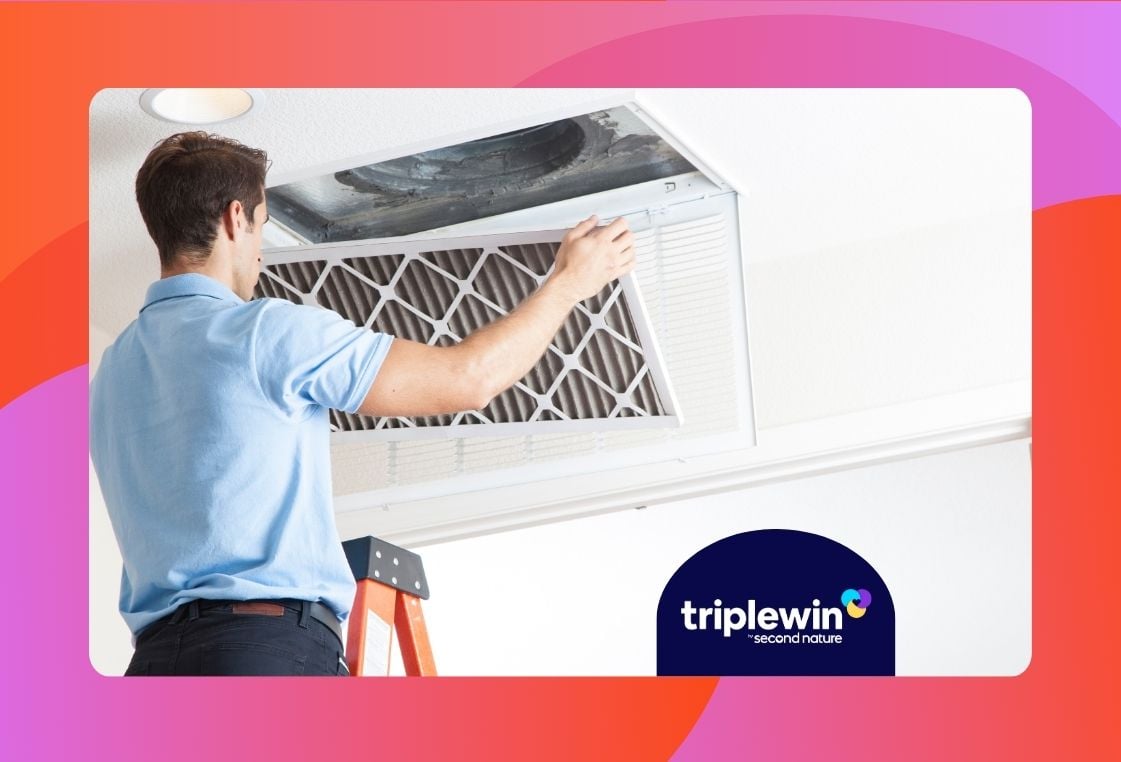
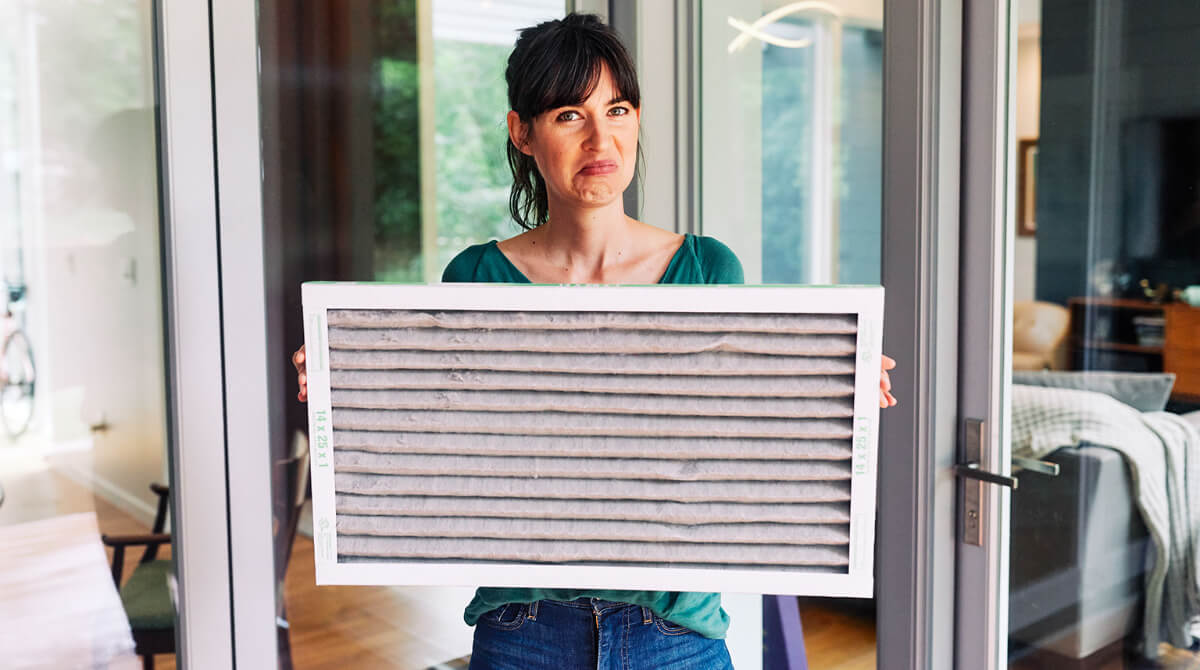
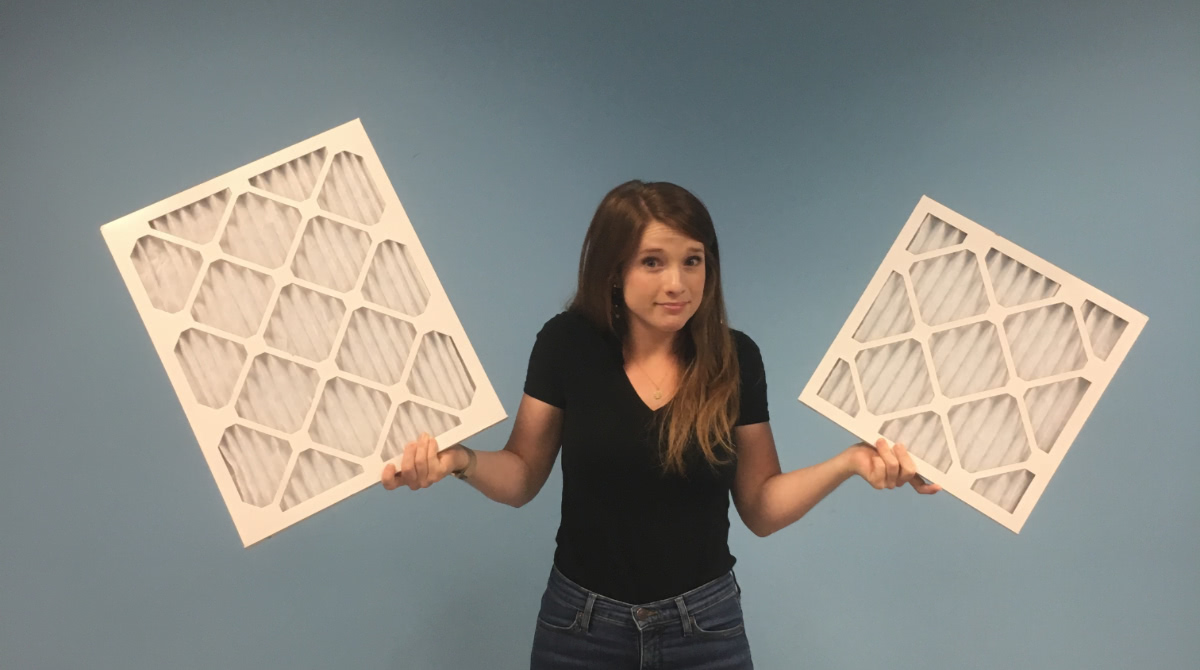
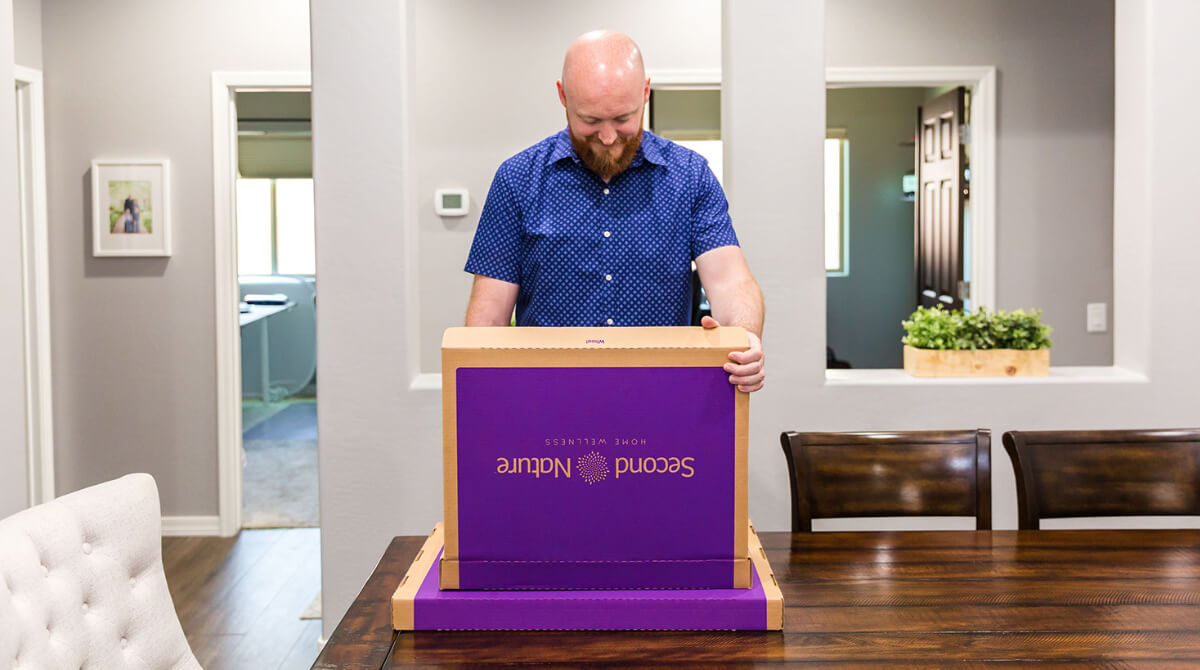
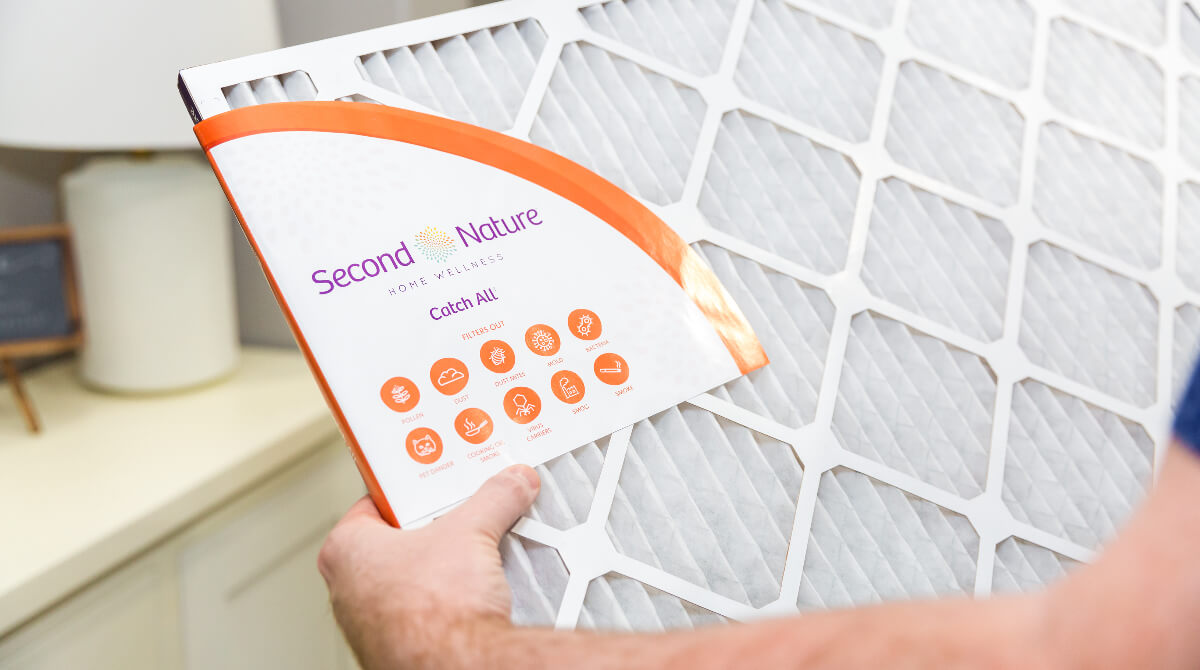
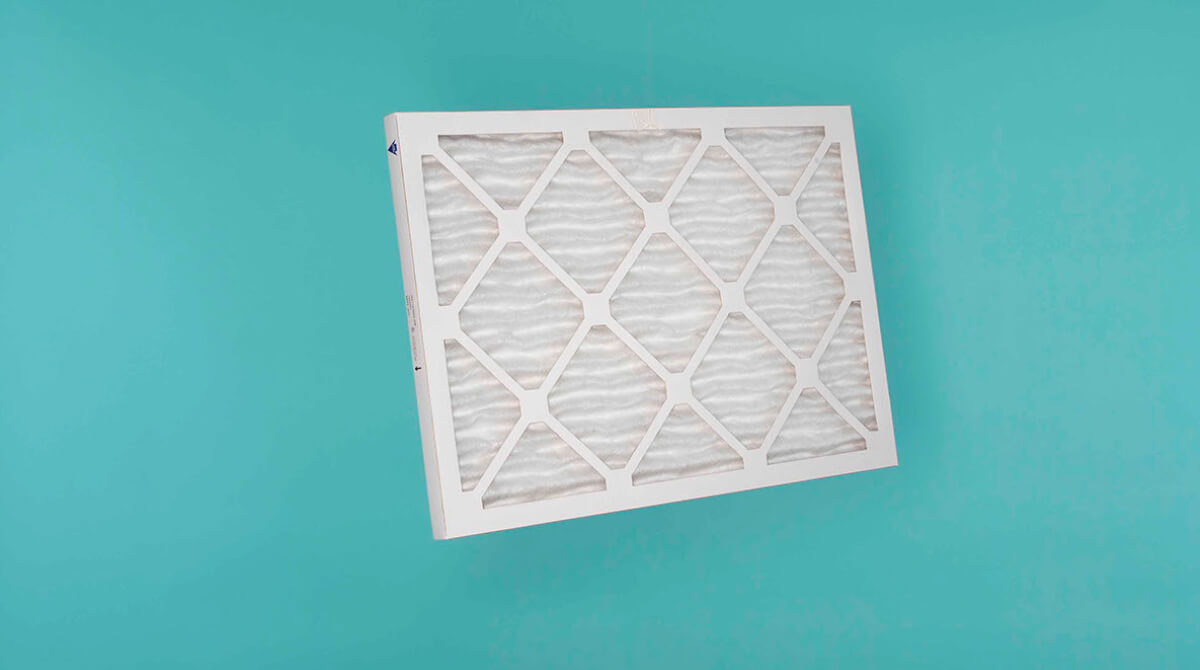
Change your filters already! Learn how to change air filters and do it already! You had to know this one was coming. For our fifth and final installment of Second Nature’s Tips for an Efficient Home, we want to remind you to change your air filters. There aren’t many routine home maintenance practices that are forgotten with more regularity than the air filter change. You should replace air filters in your home at regular intervals multiple times a year, but we all know someone who hasn’t even looked at their air filters in years (that's been us too, once upon a time). How to Change an Air Filter in Your House Changing air filters is one of the easiest ways to keep your home efficient. It’s probably the easiest of any practices highlighted in this series. That’s because home air filter installation is as simple as opening your vent, taking out the old one, and putting in the new one, or at least it’s that simple (shameless plug inbound) when you use Second Nature. Related: What is the resident benefits package? Why Changing Air Filters is Important Air filters do two things. They clean the air that circulates through your HVAC system, allowing you to breathe fresh air inside your home, and they preserve the health of said system by keeping particles and gunk from building up on it. Your system runs more efficiently with a quality air filter installed and will last longer as the result of reduced stress. ‍How to Choose the Best Air Filter for Your Home First, you need the right air filter. Skip the fiberglass and go straight to pleated. Fiberglass air filters is a bit of a misnomer since they are horrible at filtration. They do virtually nothing to keep pollutants out of your air. It’s better for air flow immediately, because it offers so little resistance, but detrimental to the long-term health of your system (and you!), as all the particles that pass through can build up on your HVAC coils and shorten the lifespan. This can result in costly repairs and even replacement. Pleated air filters are the best option for your health and your HVAC’s health. Their construction allows for much more effective and efficient filtration, which keeps that nasty stuff out of your lungs and off your system. Unless your HVAC is quite old (like really old), the more tightly wound construction of a pleated air filter won’t starve your unit of air flow. You've heard that last bit before. We're here to dispel that myth. You ready? Pleated air filters do not restrict airflow to your HVAC system! How does changing an air filter save you money? Great question. It does so in two ways. Efficient air flow through your vents minimizes the work your HVAC has to do to keep your home the desired temperature. An air starved system must run harder and longer to do so, which drives up your energy usage and ultimately your electrical bill. As your air filter catches pollutants, it begins to lose air flow efficiency as it becomes filled with dust, pollen, and any other clean air assailants it has vanquished from your home. It’s good that it’s catching these, but if you leave the filter in too long, the buildup of particle matter starts forcing the HVAC unit to work harder to get air. Now you have a system that’s struggling, thus producing higher energy costs. Learning how to change an air filter that’s dirty for a new one provides an immediate remedy to that and, as a continued practice, can boost the efficiency of your HVAC system by 15%. This boosted efficiency can extend the lifespan of your system as well, which will save you money years down the line in addition to the immediate benefits. How often is regularly? Glad you asked. The answer depends on many factors. Typically, we would recommend you do a new home air filter installation every three months, but certain elements can push this number down. If you live in a heavily polluted area, that filter will get dirty faster. Simply put, a dirty filter does a terrible job of filtering and needs to be changed. Add pets to the equation, and you might need to replace the air filter in your home every one or two months. It will depend entirely on your specific situation. Choosing air filters with higher MERV ratings is also beneficial for keeping your indoor air quality at a healthy level. Not sure which size air filter you need? Learn about the different air filter sizes to make sure you choose the best option for your home. If you want our opinion on your particular case, you can always ask! Tweet us Facebook Message us Email us ‍ And that’s how you can save 15% on your heating and cooling costs. Just swap out your air filters four times a year! If you’re interested in not having to remember this (another shameless plug coming in hot), we’ll ship high-quality, USA-made air filters right to your door when it’s time to change them.

Calendar icon June 21, 2023

Read more

Receive articles straight to your inbox

How to Get Rid of Indoor Odors & Bad Smells

Got a foul odor in your home? You've come to the right place. Do you ever walk into your home and get hit by an extremely unpleasant scent? If you do, and you don't have a pet skunk, you can look to indoor odors as the source. We promise you there are SAFE ways to reduce or eliminate odors in your home. It's essential to attack the odors head on, rather than mask them with candles or spray. If you need a quick fix to make your home smell fresher, here are some tips: Change your air filter(s) on a regular schedule. The air in your home cycles through your air filter(s) multiple times per day. If your filter is not clogged or saturated, it will do a great job of capturing contaminants and pollutants that can make your home stink. Simmer a bowl of vinegar on the stove. This neutralizes odors rather than masking them, like burning vanilla or cinnamon do. Steam clean soft surfaces like drapes, curtains, and sofas. These items often get neglected in the cleaning process. Steam cleaning them is effective at eliminating dirt, dust, and, most importantly, odors. Deodorize your stinkiest rooms by placing a mixture of 3-parts water, 10 drops of citrus oil, and 1-part vodka in a decorative bowl. This is especially effective in rooms with strong foot or body odors like mudrooms and laundry rooms. If you, anyone that lives in your home, or any of your guests/visitors smoke, do so outdoors. We cannot stress this enough. Do. Not. Smoke. In. Your. Home. Cigarette smoke clings to all porous surfaces, including walls. Pets can add all sorts of smells to a home. Keeping up with their hygiene will go a long way in keeping your house smelling fresh. If you have a garbage disposal, avoid discarding carrot, onion, or potato peelings down it. Not only can they block up your disposal, but they cause a horrible stink when they begin to decay. Often times, your garbage can will begin to stink. A simple fix for this is washing it out with white vinegar and water to eliminate any leftover odors. If your laundry basket is filled with stinky clothes, consider sprinkling some washing soda onto the pile until you get around to doing the laundry, as this will neutralize the smells. Those are some of the basic things you can do to freshen up the scent in your home. Now, if you feel like you may need even more information on how to eliminate home odors, we’ve got you covered. Here’s a complete guide to all things indoor odors and how to deodorize your home: What is an indoor odor? Dangerous odors Why does my room smell? How to get rid of home odors Clean your cleaning supplies Using an odor eliminator Maintain your pet’s hygiene Wash laundry Ventilate Keep flooring and surfaces clean Clean your kitchen Keep your bathroom clean Change your air filter ‍ What is an indoor odor? An odor that's inside, duh. Ok, this is a true statement, but there's actually more to it because science, ya know. Some odors are caused by low levels of volatile organic compounds (VOCs) in the air that humans can detect. A VOC is a chemical that can turn into vapor in room temperature conditions, and can potentially be harmful at certain levels. ‍ Dangerous odors First things first, if you notice any of these smells, it may be a sign of something more serious: ‍ Fishy smell or burning rubber smell This could be a sign of an electrical wiring malfunction somewhere in your home. The first place to look would either be appliances, a wall switch, or an outlet. If you do find that the smell is coming from your home's electrical wiring, it would be best to call an electrician. If the burning smell is strong and you can't find the source, we would recommend leaving the house and calling 911 in case there is an electrical fire in your home. ‍ Sulfur or rotten egg smell Typically, if you're smelling either of these odors, it's a sign of a gas leak in your home. The best thing to do in this situation is to leave your home, call 911, and then call your gas provider so that they can send someone over to fix the leak ASAP. ‍ Musty smell Mold is usually the culprit behind musty smells in your home. Most of the time, you should be able to handle mold on your own, but if it does turn out to be more of a problem, professional help may be necessary. How do you get rid of the musty smell in the house? Tackle the mold, of course. If you're looking for ideas on how to remove mold from carpet, look no further than this link right here. ‍ Why does my room smell? There are a lot of different reasons to ask "why does my room smell?" Here are a few different sources or indoor odors that you should investigate first: Pets Mold Dirty clothes Carpets Kitchen Bathroom ‍ How to get rid of home odors How are we going to get rid of these odors? Well, the answer isn't buying several different air fresheners and setting out a huge bowl of potpourri, although a little potpourri never hurts. Instead of deodorizing a room using air fresheners that release chemicals into the air and only mask odors, we want to remove odors at the source. You might ask, how do we do that? Look no further, we've got nine tips coming right at you to help remove indoor odors in your home. ‍ Clean your cleaning supplies Before you tackle those odors, make sure the supplies you use are free from odors themselves. ‍ If the same sponge you used in February is still sitting beside your sink, it's probably a good idea to find a replacement. Depending on usage, sponges should be replaced at a minimum of once a month to ensure that you're not cleaning your dishes with unwanted bacteria. To make sponges last longer, run them through the sanitize cycle in your dishwasher to temporary stop bacterial growth. ‍ Biodegradable sponges are also a more environmentally-friendly option! ‍ Towels can also smell pretty bad if they're left damp for too long. Make sure towels are laid out to dry after use, so mildew doesn't have a chance to grow. If your towels do smell like mildew, throw them in the washing machine with either one cup of white vinegar or one cup of baking soda, no detergent necessary. We recommend washing towels once a week to make sure they always smell fresh and never need to go through the vinegar or baking soda treatment. ‍ Lastly, keep regularly replacing the bag or emptying out the canister in your vacuum cleaner to keep it on the nice smell list. Rinsing it out with soap and water should also help remove some of the dirt that it has been collecting over time. Blockages from hair or fur should also be cleared out. If your vacuum has an air filter, make sure to follow the manufacturer's cleaning guidelines! ‍ Use an odor eliminator There are plenty of things you probably already have in your home that can naturally clear odors from the air. Some of the best odor eliminators are coffee grounds, tea, vinegar, oats, and baking soda. Leaving a bowl of any of these odor absorbers out in a room that's due for a little freshening up will help clear out the less-than-pleasant smells from the air. ‍ Baking soda is probably one of the most useful tools in eliminating odors from your home. Instead of masking odors like air fresheners and candles, baking soda absorbs and neutralizes them. It has a reputation for being one of the best carpet deodorizers. Sprinkling it across any carpeted areas and allowing it to sit there for a few hours will have your carpet smelling fresher in no time. ‍ Another place you should put baking soda? On your mattress! Your mattress is a trap for sweat, dirt, and dead skin. Definitely not the ideal things to sniff while trying to fall asleep. Just let it sit for several hours, then vacuum it up, and voila, you have many future better smelling nights of sleep ahead of you. Mattress covers are also great at keeping your mattress from collecting all of that nasty stuff. Especially if you have allergies, mattress covers can be a savior. ‍ Pet accidents? Baking soda's got your back there too. Here's how to eliminate urine odor from your carpet: First, place a layer of paper towels down on top of the wet spot. Then add a layer of newspaper to absorb as much of the urine as possible. Next, sprinkle about ¼ cup of baking soda evenly over the affected area, and let it sit out for awhile. Overnight or around 8 hours would work, but the longer it's left out, the more effective it will be. After the baking soda has had time to neutralize the odor, vacuum it all up. ‍ Baking soda and vacuuming is also effective in neutralizing odors from your pet’s bed. ‍ An alternative to this method would be to mix together one cup of vinegar, one cup of water, and two tablespoons of baking soda. If you have a spray bottle, use that to spritz the urine stain with this mixture. Bam! Odor removed. ‍ Maintain your pet’s hygiene We know you love your fur babies, but their odors? Not so much. It's important to maintain your pet's hygiene to keep them and your home smelling fresh. Bathing your pets once a month should be the minimum, but a more ideal timeline would involve scheduling a bath for every one or two weeks. Yes, if they cooperate, cats too (*shudder*). If you need help with this, consult our blog about reducing cat dander for some kitty bathing tips. Other grooming techniques include regular brushing and nail clipping. Especially if your pet spends time outdoors, their fur and nails can harbor dirt and other unpleasant things from the outside world that can contribute to home odors. ‍ Your cat's litter box can also be the source of a less than pleasant stench. Make sure that you're scooping it out at least once a day. About once a month, you should more thoroughly clean the litter box. Soap and water should do the trick as the scent of harsher chemicals can cause your kitty to avoid using the litter box altogether. Since litter boxes are often scratched, creating an ideal home for bacterial colonies, aim to replace them annually. ‍ Keep your cat’s litter box in a place in your home that is well-ventilated so that odors don’t intensify and can naturally dissipate. ‍ Last but not least, don't forget about your small animals! Your guinea pigs, hamsters, and gerbils need their cage cleaned out at least once a week to keep their living environment clean and odor-free. ‍ Wash laundry Do you have a hamper overflowing with sweaty clothes somewhere in your home? If you do, it's probably time to get a load of laundry going. That hamper is a breeding ground for bacteria and all the unpleasant smells that come along with it. ‍ Since there is a lot of moisture concentrated in laundry rooms, it is very easy for odors to become trapped in the room. To keep your washing machine smelling fresh and free from mildew and mold, keep the door open between uses. This is especially true for front-loading washing machines. When the door is closed, the humid and airtight environment is the ideal environment for mold growth. So, to clean out your washing machine, pour either one cup of white vinegar or one cup of bleach into it, and then run it for one full cycle. ‍ A lot of newer washing machines will do the work for you with a self-cleaning function, but the vinegar or bleach still help. Be sure to pick one or the other and never mix vinegar and bleach, this creates a toxic chlorine gas. Never mix vinegar with any chlorine product to avoid creating this toxic gas, or actually just never mix chlorine with anything. That's probably your best bet. ‍ We're also just going to go ahead and mention those shoes. You know the ones we're talking about, the shoes that you've worn every single day for the last 6 years and are practically glued to your feet at this point. We've all got 'em, and odors? They've all got 'em. ‍ Even though shoes bring in dirt, allergens, and yes, even C. Diff and E. Coli, only half of Americans will take their shoes off inside their homes, and less than 25% will ask their guests to take them off. Leaving your shoes at the door will for sure help leave odors at the door as well. ‍ A trip through the washing machine should be enough to have your shoes smelling fresh again, but first, a little baking soda might come in handy. Three tablespoons of baking soda in each shoe overnight should help to neutralize odors before washing them the next day. If your shoes are made from materials like leather or suede, or have embellishments, machine-washing them most likely isn't the best idea. We'd recommend spot cleaning these shoes with a damp cloth instead. Always use your best judgment, but we'd say most sneakers are typically safe to be thrown into the wash! ‍ Wash shoes inside of a pillowcase so that laces don't get tangled, and throw in a load of towels as well to muffle any loud noises. Only air-dry sneakers, however, as the heat from a dryer could cause damage. ‍ Try to limit wearing your shoes to every other day, and stuff newspaper inside to absorb any lingering moisture or odors. ‍ Ventilate Ventilate, ventilate, ventilate. Proper ventilation is vital in ensuring that odors don't intensify. Make sure that you're opening windows and using fans generously so that any odors don't remain stagnant in one place and can naturally dissipate. If it's pollen season or if you live in an area that has a lot of smog, windows should remain closed. Other than that, outdoor air quality is typically better than indoor air quality. That's why letting in outdoor air will improve both the air in your home and circulation. Special attention should be paid to the ventilation of the kitchen and the bathroom where odors have a tendency to accumulate. ‍ Keep flooring and surfaces clean Start off by dusting the surfaces in your home from the top down. For harder surfaces like shelves and cabinets, a damp cloth or duster works better to actually remove the dust instead of just moving it around to a different place. For walls and painted surfaces, a dry sponge will be more effective. ‍ Next, make sure that you vacuum your home thoroughly. Vacuum it again. And again and again. Keep vacuuming. Vacuum until you can vacuum no more. How do you deodorize carpet? You vacuum. This is because carpets are a magnet for pet hair, dander, mold, dirt, and dust, none of which smell particularly rosy. ‍ For hardwood floors, regular sweeping and mopping should be enough to keep them odor-free. If you do notice any particularly strong odors, mopping with one part vinegar and one part water should do the job. ‍ Clean your kitchen Kitchens are a major source of all the smells. Smells like bacon, freshly-baked cookies, oooh and homemade pizza...sorry got a little carried away there. Unfortunately, your kitchen doesn't always smell this good. Cooking smoke, spoiled food, an iffy-smelling dishwasher, and the garbage disposal could all be contributing to kitchen odors. So, how do you keep kitchen odors at bay? ‍ The first place you'll want to keep an eye on is the fridge. Often times, food can spoil without you even knowing it! Make sure that you're keeping tabs on expiration dates and throwing out food accordingly to avoid discovering last Thanksgiving's mashed potatoes in January. Your nose will thank you. If your fridge smells, but there's no rotten food in sight, keeping an open container of baking soda in your fridge will do wonders to absorb the odor. ‍ Leaving the exhaust fan on while cooking is a good way to keep the space well-ventilated and as odor-free as possible. Grease from cooking will typically spread to the stovetop, counters, floors, cupboards, lights, and other surfaces nearby. A good wipe-down with a natural cleaning solution should be enough to reduce grease buildup and resulting odors. Vinegar, like baking soda, is one of those products that just about cleans anything. ‍ If you notice a funky scent coming from your dishwasher, the culprit is probably the food that can get trapped in your dishwasher's filter, causing odors to occur over time. Cleaning out the filter regularly with hot water and soap is one way to prevent this from happening. Now for the odor? Place one cup of white vinegar on the top shelf of the dishwasher and run it once on the hottest setting. Then leave the dishwasher open to air dry and minimize the scent of vinegar afterward. Adding a drop of your favorite essential oil into the vinegar before sending it through the dishwasher can also keep your dishwasher smelling fresher. ‍ Now, on to the garbage disposal. Garbage disposal odors can be the result of food scraps that didn't grind properly and are starting to rot or even a buildup of bacteria. Don't worry, this is typical and pretty simple to get rid of. Just cut up a few lemon or orange slices and put them through the disposal. This also works with a cup full of baking soda and a cup full of vinegar as well. ‍ If you find that your trash can also doesn’t emit the most pleasant odor out there, baking soda will be your savior once again. Among other things, baking soda holds the title for best trash can deodorizer. Just sprinkle some in either the can itself, or the liner, and a fragrance improvement will be well on its way. Washing your trash can with water and vinegar is also an alternative method. ‍ Keep your bathroom clean Some hot spots to hit here are toilets, sinks, and showers. Where there's water residue, there's always a chance of mold. Keep your toilet clean by cleaning it at least once a week with toilet bowl cleaner. Pouring half a cup of bleach or vinegar into the toilet, then letting it sit for around 30 minutes before flushing is another way to keep your toilet odor-free. You can clean sinks and showers with bleach, or to keep things more natural, you can use a paste made from baking soda, lemon juice, and vinegar. ‍ Around once a month, pour a mixture of half a cup of vinegar and half a cup of baking soda down all drains. This will help to both neutralize odors and reduce clogging. ‍ So how do you keep your home odor-free? Basically clean. Shouldn't be too hard. That's what kids are for, right? ‍ Oh, wait. One more thing. ‍ Change your air filter Have you ever smelled an air filter before? AMAZING, better than lavender. Just kidding, we've actually never smelled an air filter before. Hold on one second. ‍ ok, after further research, air filters smell like... air? Do with that tidbit what you will. ‍ Anywho, regular air filter replacements are a necessity in keeping your home smelling nice and pretty. Your air filter traps all kinds of particles like dust, mold spores, and dander that would otherwise contribute to an unpleasant odor in your home. To keep your filter working as efficiently as possible, you should replace it at least every three months. If you think it's time for a replacement, we happen to deliver some super cool filters straight to your door. Well, there you have it, our guide to indoor odor busting. Now go grab that baking soda and a bottle of vinegar, no odor will stand a chance against you. Oh, and don't forget to sign up and get your first shipment free!

Calendar icon February 6, 2023

Read more

How Will Dirty Air Filters Impact My HVAC System?

These are things every homeowner should know. Dirty and clogged air filters reign havoc on your HVAC system. They will not only waste money on energy costs, but they will cause damage (sometimes irreparable damage!) to your HVAC system. Here are some ways a dirty or clogged air filter impacts your heating and cooling system: ‍ A dirty air filter is one of the most common reasons for HVAC system failure. A dirty filter restricts the air flow into your HVAC systems air handler. This restricted air flow places additional strain on the air handler fan motor and could, over time, burn out the motor and cause your system to overheat and ultimately fail. Filter replacement is a small price to pay to extend to life of one of the biggest financial investments in your home. A dirty air filter makes your fan motor work harder and consume more energy. One of the easiest and quickest ways to reduce your energy bill is to replace your air filter. A dirty air filter makes your heating and air-conditioning systems and your ducts get dirty faster. This can lead to costly HVAC cleaning expenses or a need to replace your HVAC unit or HVAC components sooner than you expected. If the heating and cooling coils are caked with dirt and particles that would normally be trapped by the air filter, the system will work harder and be more prone to freezing over or burning out. ‍ Your air filters are a vital part of your heating and cooling system. An HVAC repair STARTS at around $600 and an exhaustive repair (short of a replacement) can easily reach $7,000. A new system, if the damage is irreparable, starts at around $10,000. Air filters are a nominal cost when compared to the cost of repairing or replacing your home's heating and cooling system.

Calendar icon February 6, 2023

Read more

How Do I Know What Air Filter To Buy?

Pleated filter? Fiberglass filter? Electrostatic filter? Which one is for me? Pop quiz. What is the best way to rid your indoor air of pollutants like mold, pollen, and bacteria? Napalm your entire home Walk around the house waving a disinfecting wipe through the air Vacuum the air with a shop vac Purchase the right air filter‍ If you chose D, you are correct. If you chose any other option, then we need to have a separate conversation. An air filter plays a critical role in keeping the air in your home clean. In fact, it’s the most important item to your home’s air that you can purchase, and since your indoor air can be up to five times more polluted than the air outside (and no one likes breathing pollutants), you need a high-quality air filter. There are a lot of different varieties of air filters that you can purchase. Given that the average person ranks air filters right around different types of cement and how cardboard is made on the list of things that interest them, it’s not surprising that many don’t know what makes a quality air filter “quality.”‍ Luckily, all you have to do is read this one article, and you’ll have the answer to that question. Then all you have to do is sign up for Second Nature once, and you’ll never have to think about some air filters ever again. What type of air filter should I get? Filters can only be made so many ways. For home filters, you have three options. You can buy a pleated filter, you can buy a fiberglass filter, or you can buy a washable reusable filter. Each type has its disadvantages, and two of them have their advantages, so let’s take a closer look at what those are. Pleated Pleated filters get their name from their filter media, which is the material inside the frame that is responsible for the actual filtering. A pleated filter’s media is folded like an accordion to maximize surface area. Previously made of cotton, the pleated filters of today are built with synthetic polymers that allow for effective filtering while minimizing the impact on airflow.‍ The advantages of pleated filters include their high filtering efficiency. High MERV filters are almost always of the pleated variety. The pleated filters work to capture an extremely high percentage of large particles and a much higher number of small particles than competing filter types. ‍ Pleated filters are low effort and high functionality. The only thing you ever have to do is remember to change them out, and they’ll keep pulling gunk out of your air. Fiberglass Fiberglass air filters are the cheapest on the market, sometimes costing less than a single dollar. There is a reason they are so cheap, and it is because they are garbage. Yes, fiberglass filters are garbage. Fiberglass filters are the weakest option and are recommended by the National Air Filtration Association only as “prefiltering” devices because of how ineffective they are. Simply put, they are bad at their job. There’s a myth that fiberglass filters are better for your HVAC system because they allow for more airflow. While they do allow for that, advancements in HVAC and filter technology have made the difference immaterial. The extensive amount of pollutants they allow to flow through can actually make them more dangerous to your system than the pleated variety. The reason why fiberglass is often recommended is that people don’t remember to change their filter. As a pleated filter loads with pollutants, it can eventually decrease airflow to a critically low amount. Fiberglass doesn’t do this because of how woefully ineffective it is at actually catching particles. So as long as you’re regularly changing your filters, there is not a single advantage to the fiberglass option. Washable electrostatic Washable electrostatic filters are metal-frame filters that are designed to be washed and reused instead of replaced. The price range for these is wide, with the most expensive ones entering the $90 range. The advantage with these filters is their longevity. While they do eventually wear out, they can be reused for multiple years before that happens. The disadvantage is that you do need to wash them routinely and let them dry completely before reinserting. This can eat into your busy schedule as they don’t dry instantly, and if your washable filter doesn’t fully dry, mold growth can be a real issue. Washable filters also do a poor job collecting large particles. Because static electricity is really the only filtering mechanism they use, they struggle to attract the larger particles that are more difficult to pull with a charge. Thus, washable filters tend to work in reverse of fiberglass as they let larger particles through and filter out smaller ones. What quality of filter should I get? Second Nature offers two different levels of filter: Energy Efficient and Health Shield. Energy Efficient: The easy choice for the average home, our Energy Efficient filters are pleated MagicFilters made in Wilson, North Carolina. They provide a higher level of filtration than most off-the-shelf filters, while maintaining the same level of airflow. They feature a soft-edge frame, helping to ensure tighter seal within your HVAC unit. That, combined with the finely pleated filter media, captures more harmful particles than standard filters: 97% more of the smallest harmful particles 38% more medium-sized particles 16% more of the largest troublemakers. Health Shield: Our Health Shield filters provide improved performance for homes with pets or people with allergies. They capture everything that the Energy Efficient filters do, but they also capture more microscopic contaminants. They have a denser filter media, but the same metal, flexible-edged frame that creates a better seal and lets fewer harmful particles through. Are you an allergy sufferer? More than 50 million Americans have some type of allergy. Allergies are everywhere, and if you’re among the millions of people who suffer from them, your filter can help you keep those nasty allergens out of your home.‍ The severity of your allergies will help determine just how critical filtration is for your home. If you have a significant allergy to something that is prominent in your area, you’re going to want to increase your indoor air quality with a Second Nature Health Shield filter or equivalent level. More minor allergies or allergies to something that doesn’t exist in massive quantities around your home may mean that the Energy Efficient option is sufficient. Do you own pets? Owning a dog or a cat introduces a whole new threat to your indoor air quality: dander. Dander is small flakes or bits of skin that fall off your furry friend when they shed, and some people are violently allergic to it. If you are among that group, a Health Shield filter is a must. Pet dander is small, and a standard filter is likely not sufficient for you allergy sufferers out there. Health Shield will be more effective versus pet dander. If you’re allergic, get the Health Shield. If you’re not allergic, but you own pets, the Energy Efficient option will work well for you. Do you live in a polluted area? Air outside your home will become air inside your home. It is inevitable. No matter how much weatherstripping you install or how well-sealed your home is, there will be particles floating around outside that will get inside. This is particularly important to remember if you live in areas that see a lot of air pollution from things like smog. Those of you in California, as you certainly know already, can get hit pretty heavily with photochemical smog in the summer. The state is often also hit with smoke pollution during wildfire season, which also runs through the summer and fall. The particles that make up smoke are itty-bitty, smaller than a tenth of a micron. For perspective, you would need at least 3,000,000 of those particles lined end to end to equal one foot. If you frequently encounter smoke or smog around your home, a Health Shield is recommended. Still not sure what filter to get? Take our short quiz! Do you have allergies to pollen, dust, mold, or dust mites? Yes, severe allergies +2 Yes, mild allergies +1 No +0 Do you own a dog or cat? Yes +1 No +0 Are you allergic to pet dander? Yes, and I own a pet +1 Yes, but I don't own a pet +0 No +0 Do you live in a polluted area? Yes, very polluted +2 Yes, slightly polluted +1 No +0 Now add up your score. If your total was more than 2, we recommend Health Shield. If not, Energy Efficient will likely work well for your home. What size air filter should I get? As the saying goes, there are three things you can’t pick: your parents, your name, and your filter size. That’s a real saying that we did not just make up eight seconds ago. Simply, you need the filter size that fits in your air return. You can typically find that size on the side of the air filter that you already have in use. This size will be the nominal size, which means it is rounded from its actual size. This is the size you click on at secondnature.com. If you don’t have a reference point from an old filter, you’ll need to use a tape measure and measure your vent. These measurements will be the exact size, and you’ll need to add ¼” to both length and width to get the nominal size. If you have a filter that is four inches thick or thicker, you have a whole house filter. There is no rhyme or reason to how these filter sizes are rounded. Luckily, all you’ll need at secondnature.com is the actual size of the filter. Buying an air filter isn’t always easy, and knowing what air filter to buy is the hardest part. However, if you have read this far, you’re good. So congratulations! Here’s an air filter gold star. You can print it out and tape it to your shirt if you want. You’ll probably get a lot of strange looks, but that’s not your problem.

Calendar icon February 6, 2023

Read more

What Type Of Air Filter Should I Order?

There's a lot of options out there, not all of them good. There's a bewildering range of different air filter types out there and it's easy to get confused. We've done the homework for you and simplified the process so you can make the right choice. First things first: Economy fiberglass filters compared to pleated filters There really is no comparison to be made. Cheap fiberglass filters are usually sold in multi-packs for a few bucks and, in this case you definitely get what you pay for... very little quality. They are not efficient for two reasons. The relatively open weave of the fiberglass mesh does not filter out much dirt at all and the micro-particles and contaminants present in your home just get sucked through the filter and into your HVAC system. Over time, the inside components of your HVAC equipment and the air ducts get coated with crud and your system can't work at peak efficiency. This means higher energy bills and expensive sanitizing and repair bills. In short, this cheap type of filter doesn't filter very well at all, and you won't find them here at Second Nature. If you are in the habit of buying them, it's a habit you should break!‍ Pleated filters are the only way to go We only offer reliable, high-quality pleated filters, which are made right here in the USA. They are up to 60% more efficient than fiberglass and have a denser, larger surface area (imagine the pleats ironed out flat) that ensures better filtration. But remember, these higher grade filters are more efficient at capturing the bad stuff, and by doing a better job they get dirty quicker. That's good news … not bad news. They are both more efficient and faster at doing what they are supposed to do. Picking the grade of filter Your filter type depends on a number of considerations. The number of people in your home, whether you have pets, and any allergies will all need to be taken into account. Also, the possible presence of smoke, smog, and microscopic contaminants that may carry odor usually call for a higher grade of filter to trap the smaller stuff.‍ We've simplified your filter choice Second Nature offers two key types of MagiFilters: Energy Efficient and Health Shield. That makes it easy for you or your residents to select what filters are best for your property. Both are high-quality filters manufactured in Wilson, North Carolina. Energy Efficient Our Energy Efficient filter takes care of basic contaminants like dust, pollen, pet dander and virus carriers, while still allowing good airflow through the HVAC system. It's a great all-purpose filter that works well for most homes. With a soft-edge frame that creates a tighter seal, our Energy Efficient option is capable of capturing 97% more of the smallest harmful particles, 38% more medium-sized particles, and 16% more of the largest troublemakers. Health Shield Our Health Shield option traps all the contaminants that our Energy Efficient filter does, but it goes even further, capturing microscopic allergens that can irritate allergies and sensitivities. If someone in your home suffers from allergies or respiratory problems, or if you have pets in the house, the Health Shield filter is a great option. The denser filter surface means that Health Shield filters will get dirtier faster (because they're capturing so many more particles), and will need to be changed more frequently. In return, you will be rewarded with the reassurance of sustained, super-fresh indoor air quality similar to hospital standards. If you're a property manager looking to offer a fully managed, high-quality filter delivery service to your residents, look no further. Talk to a member of our team today to learn how to get started.

Calendar icon February 6, 2023

Read more

The Truth About Pleated Air Filter Pressure Drop

What is pressure drop? How does it work? What is static pressure? In the world of HVAC, static pressure is defined as the resistance to airflow in your HVAC system created by the components of said systems. Generally, lower static pressure is better. High static pressure results in lower airflow, which allows your HVAC system to condition less air at a time. This forces it to work longer (not harder), which if left unchecked can result in higher power bills and potentially shortened lifespan. When selecting a filter, static pressure is an important factor, but it is far from the only factor to consider. ‍Related: What is the resident benefits package? What is a pressure drop? Pressure drop is defined as the change in pressure from one defined area to another. In HVAC, this is referring to the change in static pressure as air moves through your air filters. Put simpler, it's how much your air filter restricts airflow. The most common cause of a pressure drop that exceeds acceptable levels is your air filters being left unchanged for far too long. Many still believe that an air filter with a high MERV rating can instantly create a pressure drop that is above acceptable levels, but this is actually false. ‍ Pressure drop myths The most common myth around pressure drop is that pleated air filters have too high of a pressure drop. We’ve already discussed the airflow myths around pleated air filters, but we’ll expound a little more with regards to pressure drop specifically. ‍ The pressure drop of a fiberglass filter is about 0.1 inches of water. (inches of water is a measure of pressure differential. The name sounds counterintuitive when talking about air, but you can read more about it here if you want). These super cheap filters are the thin, flat, and usually green or blue ones that are typically less than a dollar. They are often erroneously recommended by technicians because of their extremely low pressure drop. Here’s what you’re not being told. ‍ The pressure drop of a MERV 8 pleated air filter is around 0.12 inches of water, which is almost exactly the same as the 0.10 of the fiberglass. A MERV 13 pleated air filter, the highest quality offering from Second Nature and most other filter companies, has a pressure drop of around 0.25. That’s definitely more, but if you recall from our study, even with that pressure drop, the likelihood of it reducing the lifespan of your HVAC unit is slim to none. ‍ You might be wondering how that is possible. It has to do with the construction of the filter. There is a relationship between the surface area of the filter and the pressure drop, which is the reason for the pleats. By folding the filter media accordion-style, the surface area increases dramatically while the filter frame remains the same size, allowing for greater airflow without having to increase the size of the actual filter. The filtering efficiency itself is also increased by changes in thread materials to materials with better electrostatic properties, which physically attract particles with static electricity. The result is a lower pressure drop with higher filtration efficiency. This is what makes pleated filters the best on the market. They're able to achieve high levels of filtration without high pressure drops, also known as too much airflow restriction. Remembering to change your filter is key to minimizing risk from pressure drop There is not really much risk with a brand new filter anymore because of the technological advancement of the pleated air filter. Problems that your system will experience from high pressure drop are usually a result of a filter left unchanged for far too long. It’s commonly understood that an air filter will actually become more effective as it fills with particles. This is true. So why not just leave it in the return forever? Because the buildup results in an increased pressure drop. If left unchanged for too long, your filter could fill to the point where airflow is zero, meaning your system is running, but accomplishing absolutely nothing. This is not good. ‍ Making sure you're using a good filter is important. Making sure you're changing it on time is equally important in order to avoid increased power bills and excessive wear on the components of your air conditioning system. According to the Department of Energy, changing your filter on time can save you 5-15% on your heating and cooling bills. Our goal as a company is to make sure people remember to change their filter, which is why we offer an air filter subscription with a completely customizable schedule.

Calendar icon February 6, 2023

Read more

How to Test Your Indoor Air Quality

Learn how to measure air quality using an indoor air quality monitor and other useful tools. You’ve almost certainly heard us say at some point that the air inside your home can be up to five times more polluted than the air outside your home. It’s a striking statistic given how much focus is put on outdoor air pollution, and hopefully, one that will help shine some light on prevalent Indoor Air Quality (IAQ) issues that most people are not aware of. The actual amount of air pollution in each home in the United States is going to vary, and it’s going to vary a lot. There’s a wide array of risk factors that affect IAQ and which ones are relevant can change by state, county, or even by town. If you know these risks, you can probably estimate how much indoor air pollution affects your home. If you want some piece of mind though, you can always test your indoor air. At the very least, you'll know what you're dealing with. We did the research, and here are some ways to do just that. Purchase an indoor air quality monitor Test for mold in the air. Install carbon monoxide alarms Conduct a radon test. Purchase an indoor air quality monitor An indoor air quality monitor is exactly what it sounds like: a device that monitors the quality of your indoor air. IAQ is not something that enough people consider, so you’re probably in the majority if you had no idea that these products existed for consumers. They do, and they are the easiest option on the market today for consistently checking your Indoor Air Quality. ‍ What is it? An always-on electronic device that consistently tests and reports on the levels of pollution inside your home. ‍ What does it test? This varies by device, but almost all of them test for particulate matter, chemical pollutants, and humidity. Some will track temperature, carbon monoxide, its less harmful friend carbon dioxide, and even formaldehyde levels. ‍ Pro Tip: Particulate matter includes things like pollen and dust, and is essential to track because many IAQ issues are linked to it. ‍ How much do they cost? While some home air quality testers retail for a little over $50, the average starting price is more like $100. The top end price is north of $300, and many sell at the middle ground of around $200. It’s not a cheap device, but it’s not too bad for a one-time investment in home wellness. ‍ ‍How does a home air quality tester work? Many models have a display panel that will show you values and readings in real time right on the device itself. Others opt to show overall IAQ with an indicator light and share specific readings with your phone via a dedicated app. Most are smart home enabled as well and can pair with devices like thermostats to help manage your indoor air and energy usage. ‍Related: What is the residents benefits package? There are a ton of examples of good IAQ monitors you can purchase for your home. Here are just a couple. Foobot Price: $199 Measures: Particulate matter, chemical pollutants, humiditiy, temperature Features: Dedicated app to track readings and compare them to outside air, smarthome enabled, offers general IAQ reading with single light ‍ Awair Glow Price: $99 Measures: Chemicals (VOCs), temperature, humidity, Carbon Dioxide Features: Dedicated app to track readings, can turn on smart and non-smart devices with its external power outlet, night light ‍ Netatmo Price: $99.99 Measures: Humidity, air quality, noise, temperature Features: Dedicated app to track readings, smarthome enabled, offers general IAQ reading with single light ‍ Test for mold in the air. A common household pollutant that your indoor air quality monitor won’t report on is mold. Everybody has seen mold in their home at some point, probably on some bread that they forgot to throw away. That mold is easy to deal with. You just throw away the bread. What's less obvious and a greater threat to health is airborne mold spores that are polluting your indoor air. ‍ What type of home mold test should I use? Home mold tests are cheap, easy to use, available at most hardware stores, and almost entirely useless. So the answer is none. You should use none of them. ‍ A standard home mold test typically consists of a petri dish that you allow to sit in your home, along with a substance to create mold growth inside (usually something called potato dextrose). You leave the test out for a specified amount of time, and then you cap the petri dish and let it incubate for a specified amount of time. These times vary by brand, so follow the manufacturer’s guidelines. If mold grows, you have mold. If it doesn’t—well, you get the point. ‍ Spoiler alert: there is mold in your air. Mold spores are in the air just about anywhere you could go, including inside your home. Testing for the presence of mold is like testing for the presence of air. It is there, we promise. ‍ There are two critical questions to answer regarding mold in your home, and whether or not it is there at all is not one of them. The first is whether the amount of airborne mold spores found in your home is excessive. Since there is no official guideline from the EPA on how much mold is too much, this is usually done by comparing the concentration of mold spores floating in your home to the concentration of mold spores floating outside. It’s also a task for a professional. ‍ You should schedule one of these tests if you believe for any reason you may have a mold issue but aren't sure since you haven't seen any. Often times, there is a musty smell that is the calling card of larger than average amounts of mold. If you find that you're coughing or sneezing more than usual, that may be a sign of high mold concentration in your home as well. ‍ Professional mold removal service Moldman cites these eight reasons as the most common they see for mold inspections: ‍‍ “8 situations that warrant testing for mold: You are experiencing allergic symptoms, such as stuffy head, headaches, scratchy throat, runny nose and not sure why. You think you see mold but are not totally sure it is mold. You smell a musty odor but don’t see any visible mold. There have been plumbing leaks or water issues in your home or office. You want or need air testing after mold removal has been done by you or a professional to check whether mold levels have normalized. You are a buyer or seller in a real estate transaction and need evidence whether airborne mold levels are not normalized. You a landlord or tenant and need evidence whether there is a mold problem. You are looking for a general assessment of your indoor air quality to make sure your family is breathing high-quality clean air in your home." ‍ Pro Tip: If you see visible mold, you do not need to hire a professional to test your home. You’ve already identified that you have a problem the second you laid eyes on that nasty stuff. You can jump straight to hiring a professional for removal of the fungus. ‍ If an inspection discovers that you have a mold problem in your air, the most important question becomes “what is the source of the mold?” You cannot fix the problem if you don’t know where it is coming from, and the ultimate goal is to rid your home of large amounts of mold. Your inspector should be able to conduct this investigation also. ‍ It’s a common belief that there is a third important question, which is “what type of mold do you have?” Believe it or not, this is useless information an overwhelmingly large amount of the time. There are thousands of types of mold. Most people have heard of black mold, which is commonly believed to be “toxic mold.” The potential presence of this is the reason people often think that they should know the type of mold they are dealing with. ‍ The truth is that most molds, including black molds, do not produce toxins, and some species are capable of toxin production only under certain conditions. Even if you have toxin-producing mold, dangers are typically associated with ingestion, not inhalation. So it is highly improbable you will inhale dangerous levels of toxins produced by mold from the air in your home. This, coupled with the fact that the removal procedure for all types of mold is pretty much identical, gives virtually no reason to care what type of mold you may have. ‍ A professional mold inspection will be able to answer the important questions for you. For an average sized house, an inspection of your home will usually cost between $300 and $400. ‍ Install carbon monoxide alarms. Most Indoor Air Quality issues will have long-term and gradual effects on health. The presence of carbon monoxide (CO) is not one of those. Known as the silent killer, CO is tasteless, odorless, colorless, and it will kill you dead if you’re exposed to large amounts of it for too long. ‍ Carbon monoxide is a byproduct of fuel combustion, so appliances like gas dryers, gas burning stoves, and gas furnaces are risk creators. If you own any of these appliances, grabbing some carbon monoxide alarms from the store is a must. ‍ Even if you don’t own a gas dryer or stove, it can’t hurt to install these still. Carbon monoxide may not be a prominent danger in your home, but anything that burns gas creates CO. A lot of homes have gas water heaters that produce CO. And you can't forget about fireplaces. Any fire (wood burning or not) produces CO as well. In other words, just get a carbon monoxide detector. A few alarms is a small price to pay for complete assurance of safety from the silent killer. ‍ Many indoor air quality monitors measure CO concentration and can alert you if something is afoot. That’s great, but you can’t place one in every area of your home without spending around $1000, and they don’t typically come with a screaming alarm that you can always count on to wake you up in the night. This is why you need CO alarms. ‍ Your average carbon monoxide alarm costs about eight bucks at any local department or big-box store. There should be one within 10–15 feet of each sleeping area, and try to keep them out of corners if possible. Some are battery-powered, but many models plug directly into the wall, so the whole process can actually be as simple as opening the box, plugging it in, and boom: you’re protected. ‍ Pro Tip: Carbon monoxide is lighter than air and rises, so logic would indicate that alarms should be placed near or on the ceiling. This would make battery-powered models a more effective option because they could be installed at any height. Contrary to this belief, studies have shown no material difference in the readings of floor level and ceiling level alarms, so an electric model plugged right into the wall will do the trick. ‍ Conduct a radon test. Radon, like carbon monoxide, is odorless, colorless, tasteless, and completely undetectable without a purpose-built detection device. Unlike carbon monoxide, it won’t asphyxiate you, but it is dangerous in the long-term. According to the American Cancer Society, 21,000 lung cancer deaths per year are attributed to radon exposure. ‍ Radon can enter your home through cracks in your floors, foundation, walls, or areas around pipes. Because radon gas forms from the breakdown of natural uranium deposits in the soil, it usually enters at the lowest levels of your home and concentrates there. ‍ Image credit: New Jersey Education Association ‍ Short-term radon test kits can be purchased in any home improvement store or online, and National Radon Program Services at Kansas State University offers them at discounts. Unlike home mold tests, these things do provide some value by telling you how much radon is in your home. ‍ Pro Tip: There are also electronic radon tests that continuously measure concentrations of the gas. These, like carbon monoxide alarms, are plug and play and always on. They’re not cheap though, running north of $150 for many models. ‍ A short-term radon test is pretty easy to conduct. You simply place the test object provided in the package in the highest risk area of your home and allow it to sit for the duration of time recommended by the manufacturer, which is typically between two and seven days. ‍ ‍ Pro Tip: As stated above, the highest risk areas of your home will be the rooms closest to the ground or below the ground. Place your test in the lowest level of your home that people will spend time in. ‍ It’s a good idea to close windows and doors around the test area and then avoid using the area until the test is complete. This will help eliminate any external factors that can affect radon counts. After the test period is complete, you must mail the test to the manufacturer’s lab for analysis. Your short-term radon test is complete. ‍ There are also long-term radon tests, which remain in your home from 90 days to as long as a whole year. Radon levels can fluctuate with some significance depending on the weather and time of year, so a long-term test can help determine an average over several months to a year. ‍ The lab results will be able to inform you whether or not further action needs to be taken regarding radon in your home. If you find high levels of the gas, a professional inspection should be scheduled to identify trouble areas that can be sealed up. ‍ Pro Tip: When buying a home, radon tests are usually conducted along with other inspections. ‍ Like carbon monoxide, radon gas is not something to toy with. However, as long as you take some simple and easy steps and understand what you can and can’t fix on your own, you won’t be in any danger from either of these gases. ‍ --- ‍ There are a lot of threats to Indoor Air Quality out there. Luckily, there are ways to test for all of them, sometimes cheaply, and there are fixes for all IAQ problems. Remember to keep changing your air filter, as that can help quite a bit with particulate matter and mold. And if you struggle to remember, try a Second Nature subscription (did you like that segue right there?). We’ll ship you quality air filters when it’s time to change them, so you never forget again.

Calendar icon February 6, 2023

Read more

How to Reduce Pet Dander and Pet Odors

Love your pets without worrying about their impact on home wellness. When you open your home up to lovable little furballs, you often adopt the pet odors and pet dander that come with them. Wondering what kills pet dander and odor? Fortunately, there's a lot of ways to help your house smell like normal people live there instead of doubling as a kennel. In this post, we’re sharing a few tips for how to reduce pet dander in your home and how to get rid of pet odor for good. How to Get Rid of Pet Dander Baking Soda: Man’s True Best Friend Baking soda is a fantastic neutralizer, which is why it’s top of the list for how to get rid of pet odor. Ever had anyone recommend you leave baking soda in the fridge to eat up weird smells? The same concept applies outside of the fridge, too! All you have to do is sprinkle it on your most pungent areas and it should absorb most of the smells, especially if you're dealing with pet urine. Then after a few minutes, vacuum up the baking soda. ‍ Now you may have heard similar claims with vinegar. So, does vinegar kill pet dander? While vinegar is also a great deodorizer but be careful using it if you have cats in the house. The smell of vinegar is similar to ammonia, which is similar to the smell of pet urine, which can attract them to continually mark or pee on certain locations. Dealing with cat dander? Learn proven tips to get rid of cat dander in your home and the allergies that come with it. ‍ If you want something more specific than baking soda or vinegar solutions, enzymatic cleaners are also a great way to target pet urine stains and smells. ‍ Keep Pet Accessories Clean Does your dog or cat have a favorite (conveniently machine-washable) toy? Do you use the same harness and leash every day on your walks? Is the dog bed completely covered with fur, dirt and other lovely doggy byproducts? ‍ Clean up! Clean out food and water dishes regularly. Throw toys, leashes, pet beds and other accessories into the washing machine (or wash by hand). ‍ Wash Your Human Accessories, Too When it comes to how to get rid of pet dander, along with odor, you’ll have to clean some human things too. If you let your pets onto the bed or couch, you're going to have to keep those areas clean too. Target the areas where your animal stays regularly and make sure they're vacuumed and free of pet hair and dander. ‍ Change Your Air Filters on a Regular Basis So not to be biased here, but changing your air filters consistently (especially if you have more than one pet) is a highly effective way to help deal with pet smells. If you have allergies or guests who may be allergic to your animals, it's also just the considerate thing to do in the long term. ‍ Because pet dander is microscopic, you’ll need an air filter with a high MERV rating to ensure it catches all those pesky particles. Not sure what size air filter you need? No problem. Check out our complete guide to air filter sizes. ‍ Brush Your Pet(s) at Least Once a Week Brushing is not only a way for you to further bond with your pet but also keeps the fur from flying and is how to reduce pet dander. Some sources recommend brushing your pet daily but it also depends on the length of your animal's fur - the general guideline is long-haired animals are best brushed daily (to prevent tangling and matting of fur/hair), medium-haired animals are best to be on a weekly basis and short-haired animals can go a few weeks but at least once a month is best. ‍ Clean The Dander Traps You may need to incorporate some new areas into your cleaning regime or restrict the areas that your pet plays to keep Sparky away from some of the more common pet dander trap areas. Follow these quick tips for how to get rid of pet dander: Do not allow pets near your bedding. Bathe your pet weekly, at least. Keep pets off of the couch. Vacuum soft surfaces (aside from the normal carpet vacuuming) like drapes, curtains, sofas, and stairs. Consider replacing carpet with hardwood floors or selecting a home that has more hardwoods than carpeting, as carpets are a HUGE trap for pet dander. ‍ We understand your pets are a part of the family and that you want to keep them around as long as possible. We also understand that you want to know what kills pet dander and odor the fastest. By implementing these tips, you can significantly reduce (if not eliminate) pet odors and pet dander from your home. Not only will your home be more pleasant without pet odor, but reducing pet dander improves your indoor air quality. If you or your family have allergies or asthma, you can reduce allergy symptoms and asthma triggers by fighting pet dander in your home. So, what are you waiting for? You know how to reduce pet dander and odor. Hop to it!

Calendar icon February 6, 2023

Read more

What Does MERV, MPR & FPR Mean?

Air filters are rated by several different metrics and systems, depending on a variety of factors. Second Nature makes filters easy by breaking these ratings down and utilizing one standardized metric-MERV. What is a MERV rating? MERV ratings were established by the American Society of Heating, Refrigeration and Air Conditioning Engineers (ASHRAE) in order to aid consumers understanding of what type of air filter will best fit their home’s needs. ‍ MERV is the worldwide standard rating system for air filter quality. The MERV, or Minimum Efficiency Reporting Value, tells the consumer how effectively a filter can catch household contaminants such as dust, pollen, and pet dander. The higher the MERV rating (anywhere from 1 to 16), the more and smaller particles are filtered from the air. ‍ MERV Ratings. Typical Applications 1-4 Residential Window Units 5-8 Better residential, commercial & industrial 9-12 Superior residential, better commercial, hospital labs 13-16 Hospital, general surgery ‍ It is important to keep in mind that MERV indicates the minimum ability of a filter to catch airborne particles. Over time, a filter begins to fill with dust and dander, therefore increasing its ability to stop contaminants from passing through. However, the higher the MERV, and the more a filter has already caught, the harder it becomes for your system to draw in air. A high MERV rating may seem like a good idea to a homeowner who wants to ensure they are breathing fresh air, but it is important to make sure that your HVAC system is capable of handling the restrictive properties of a high MERV filter. Home air filters with higher MERV ratings also need to be changed at a higher frequency due to their higher efficiency and particle-catching abilities. Simply put, they catch more contaminates over a shorter period of time. ‍Related: What is the resident benefits package? MERV vs FPR FPR, or Filter Performance Rating was developed by the Home Depot, based on independent lab test results comparing MERV ratings. It is used strictly in Home Depot stores and does not correlate directly to MERV ratings. ‍ MERV vs MPR MPR, or Microparticle Performance Rating, was created by 3M to rank their filters’ ability to catch the smallest airborne particles. MPR is helpful when comparing one 3M Filtrete filter to another, but it does not directly translate to MERV. ‍ MPR vs. MERV vs. FPR The chart below shows the associated values for each of Second Nature's filter types. MERV MPR FPR Essential MERV 8 MPR 600 FPR 5 Essential+ MERV 10 MPR 1000* FPR 7* Health Shield MERV 13 MPR 1500 - MPR 1900 FPR 10 *approximate values

Calendar icon February 6, 2023

Read more

How Do I Know What Size Air Filter I Need?

Where do I find my size? Air filter sizes can look a bit intimidating, especially when a great deal of homes have multiple filters of different sizes. Second Nature is here to make filter buying EASY. Once you enter your filter sizes with us just once, not only will you not have to remember when it's time to change them, but you will no longer need to remember those tricky sizes. In order to find the size of pleated filter(s) used in your home, you need to look no further than your existing filters. On the outer frame, you will see at least one set of numbers. If you see two sets of numbers, the filter size needed to order replacements is the nominal size, not the actual size. You can ignore the actual size printed on your filter for this task, as the nominal size is the number set needed to order new filters. Your filter size (again, referencing the nominal size for your filter here) will look something like this: 20" x 20" x 1" or 20" x 25" x 1" or 14" x 20" x 2" The size of your pleated air filter is always presented in a string of three numbers, with the first number representing the length, the second number representing the width, and the last number representing the thickness. ‍ If you’re still not sure what size filter(s) your home needs, feel free to reach out to us.

Calendar icon February 6, 2023

Read more

Where Are My Air Filters Located

Where in my house are the filters? While it’s crucial to change out your air filters regularly, you won’t get far if you do not know where they are supposed to go! Whether you recently moved into a new home or your better half (you know, the responsible one) isn't around, here are some tips and clues you can use to make your search easier. ‍ Changing the filters in the HVAC unit In this case, your air filter is most likely located right next to your furnace or air conditioning system air handler. The air handler is the large metal box containing the fan and fan motor. Typically, the unit would be found in a basement, an attic, or sometimes in the back of a closet. Once it is located, look for a slot where an air filter should fit. What you are seeking is a 1" wide hinged or removable cover. If you have a thicker filter that is 4" or more, the slot should match accordingly. There should already be a filter placed in there, which will confirm that you found the right spot! It will depend on your unit, but it can be orientated vertically or horizontally. Just make sure that your airflow arrow points towards the unit! If you looked everywhere and you still cannot find any possible place to put in a filter, there is no need to panic! It just means that you need to use a return vent. That, or you might have to update your eye prescription. Changing the filters in a return vent The air handler pulls air in from the house through the return duct system, and then blows the air through the heating or cooling system and back into the house through the duct system. The air filter is typically located at the point where the return duct enters the air handler. ‍ Larger houses often have more than one HVAC system. Each system will typically have at least one air filter. Therefore, your home may have filters located at the air handler AND in the returns. You should check each possible location to make sure you have found all of your filters. ‍ Since HVAC units are usually hidden away in smaller and less convenient spaces, some homes are set up for air filters in return vents. Return vents are often in the wall but can be in your ceiling or even the floor. The vent will be rectangular or square and should be larger than a standard air duct vent. If you already know the filter sizes that your home needs, that is a good hint for the shape of the return vent that you need to find. ‍ Once found, the cover of the return vent can be removed by pulling a tab or unscrewing a bolt. For the latter, an ordinary coin should do the trick to loosen it, similar to a standard screwdriver. Place the cover to the side and remove the old filter. Place the new filter in the same way as the old one. Pleated filters have one side that has thin metal wiring and another side without. When installed in the return vent, the side with metal should be facing away from you and should not be seen. The purpose of the wiring is to keep the filter's shape. Since the vent is pulling air inwards, it is more efficient for particles to collide with the plain side of the fibers. Finally, put the cover back, throw away the old filter, and then find the next return vent. ‍ Case closed You should now be able to find all the spots where your filters need to be installed! If you are still uncertain and would like more assistance, a local HVAC technician would be able to find all the locations that need to be maintained easily. Just be sure to regularly check on your filters and change them out frequently to have clean air and a happy HVAC system! Or you could save some time by signing up for some pretty handy air filter subscription service. Just a thought.

Calendar icon February 6, 2023

Read more

A Beginner's Guide to Weatherstripping

Do you know your weatherstripping? Drafts and air leaks exist in about every home in America. The edges of windows and doors are the primary enablers for this air outside your home to get inside your home and vice versa. Drafts may not seem like a major issue, but over time they can really drive up your power bill as conditioned air escapes, and they can introduce lots of foreign pollutants from outside into your home. In short, it's something worth fixing, especially since it usually takes about five minutes and 20 dollars to do so. ‍ So how do you actually accomplish this task? With the magic of weatherstripping. Weatherstripping is basically strips of materials that you adhere to doors and windows. These materials, if installed correctly, seal the edges of doors and windows when they're closed, preventing the movement of air any nasty stuff in the air. Pro Tip: Weatherstripping is commonly associated with wintertime, but it's just as valuable in the summer as it is in the cold months. How do I know if I need weatherstripping The first step in identifying where your home needs weatherstripping is to test for air leaks in places that are most vulnerable. There are a handful of do-it-yourself options for this, or you can hire a professional to conduct an energy audit. A professional energy auditor will give you precise answers to where you need weatherstripping, in addition to other useful information. ‍ If you wish to opt for the DIY versions, there are a couple ways to test for insufficient seals. ‍Related: What is the resident benefits package? The flashlight test This requires two people and it needs to be at night. So grab a friend, child, or spouse, promise to buy them a bottle of wine for their help (unless your children are helping—please do not buy wine for your children), and get to work. ‍ The test, which works best for doors, is pretty simple. One person takes a flashlight outside once it's completely dark out. Close the door behind them and have them shine the light all around the door and surrounding areas. If you can see light coming through at any point, that's a point where you have an insufficient seal and should consider adding weatherstripping. ‍ The moisture test The moisture test only requires one person and can be done at any time of day, but it's helpful if it's done on a cold day. If you're looking to save money this summer, you may want to pick a different test. ‍ The moisture test is also pretty simple. Wet your hand with some room temperature water and then feel your way around the edges of the door or window. The moisture will cause your hand to feel cold if it comes in contact with air from the outside (again, this only works on a cold day). If it feels cool, go ahead and add some weatherstripping. ‍ The dollar bill test This test is specific to doors and requires the use of a single dollar bill. Open your door and place a dollar bill in between the door jamb and the door itself, then close the door. Grab the bill and try to pull it out. If it slides out easily, time for some weatherstripping. ‍ The smoke test The final test you can try for a draft in your home is what we'll call the smoke test. This involves lighting a candle or match and holding it behind your door or window. Watch the smoke carefully for changes in how it moves. If incoming air effects the smoke stream, it's a good bet you're losing money and warm/cool air through a draft. Time to do some weatherstripping. ‍ The different varieties of weatherstripping Who knew weatherstripping could be this complicated? It turns out there are a ton of different kinds of weatherstripping, some of which perform better in certain situations than others. We're going to simplify this down as much as possible. ‍ There are several different varieties to pick from. We did some research for you, and hopefully, this can help you become a weatherstripping expert—or just learn what you need to make an informed decision. ‍ V-Seal V-Seal is probably the most common type of weatherstripping that is used within the home. Its name comes from the V shape that it takes when you fold it down the middle, which allows it to line the inside edges of window and door frames. It can come with adhesive backing for easy installation, or it can come without one and requires nailing in. If installed correctly, V-Seal can be among the most durable weatherstripping options. ‍ Felt Inexpensive and less durable, felt is sort of the "old news" of the weather stripping community. It's sold in rolls and can be installed stand-alone or with a metal strip for reinforcement. It's useful in doorways where it is affixed or nailed to the door jamb. That way, when the door closes, it compresses the material and blocks out air. It's important to note that felt does not work well in high moisture conditions. Felt is known as the cheapest and one of the easiest options. ‍ Door Sweep The type of weatherstripping best designed to seal out air coming in from underneath the door is what is known as the door sweep. Drafts usually exist at the bottom of doors facing outdoors, which is why this type of weatherstripping exists. You'll often find two options: a metal or plastic strip that you screw into the bottom of the door and a brush, or piece of nylon that extends to the floor (the sweep). If installed correctly, this will cover the entire space beneath the door. Some versions actually slide onto the bottom of the door instead of being nailed into the bottom of the door. ‍ Foam Tape Foam Tape is sort of like of felt except slightly more advanced. While the application is very similar, foam is of higher quality than felt. It usually comes with an adhesive backing for easy installation. Also like felt, it's one of the less durable options and should not be installed in high moisture areas. ‍ Rubber tubing This type of weatherstripping may have a variety of different names, but its construction is rubber with adhesive backing. Installation is similar to that of foam tape. Still, the rubber will last longer and is not as vulnerable in moist conditions. It can also provide waterproofing in addition to fighting off air leaks. ‍ Outlet Gaskets One place you might not expect to find an air leak is at your outlets and light switches, but surprisingly, these areas can be just as vulnerable to drafts as your doors and windows. Luckily, covers that seal up these places are cheap and take only a minute to install. It's as simple as removing the plastic covering from the outlet or switch, inserting the foam gasket behind it (make sure you punch out the holes first), and then reinstall the cover. That's it. That's literally it. You should be able to do your entire house for under $20. ‍ Weatherstripping is one of the easiest and most useful do-it-yourself tasks for your home. It's relatively inexpensive, can take only a handful of minutes to install, and will leave you knowing you made your home healthier and more efficient with this quick and easy DIY project.

Calendar icon February 6, 2023

Read more

How to Clean and Stain Your Deck this Spring

Which deck cleaners and stains are best for you, and how do you ensure a professional level clean without hiring a professional? We have a Spring! Winter appears to finally be releasing its grip on most of the country, giving way to warmer temperatures, blooming plants, and the incessant need to clean. It’s what we call Spring cleaning, and undoubtedly you’ve heard the term. ‍ If you’re ready to kick off spring cleaning but have no idea where to start, you’ve arrived at the right web address. With the weather warming and all of us itching to take advantage of the suddenly pleasant outdoors, preparing your back deck for usage is an excellent place to kick things off. So let’s do it. ‍Related: What is the resident benefits package? Prep your deck Chances are you haven’t spent a lot of time on your deck or porch over the last couple months, on account of the whole winter situation. Now that spring has sprung, it’s about time to take advantage of the milder weather that’s coming. ‍ Now at this time of year, your deck is almost certainly not in the best shape of its life. If you have a wooden deck, the lack of use throughout the winter has allowed the wood to lose its color a little, become stained as a result of leaves and tree bark being left on it, and be victimized by the growth of certain mildews. ‍ That’s normal though, and some spring cleaning will revitalize its look. Step one is to make sure that you clear everything off your deck. This includes any furniture, lights, or accessories that you may have out there. It also includes all the debris that has fallen during the winter and found a new home on your deck. Be sure to clear off leaves, tree bark, pine straw, or any other trash that nature left out there. ‍ It’s a good idea to sweep your deck of this stuff throughout winter, as dead leaves and other junk are responsible for pesky tannin stains that leave you with more work come spring. ‍ SN Tip: During this step, it may also be a good idea to move any potted plants near the deck away, as you will be working with chemicals. ‍ Clean your deck Step two is where you’re going to apply your deck cleaner. There are lots of different kinds of deck cleaners, but most professionals agree that a one-two punch of an oxygen bleach cleaner and an oxalic acid cleaner is the best and safest route. ‍ Oxygen bleach will target mold that has grown on and in your deck over the cold months. It’s non-toxic and breaks down into sodium bicarbonate and oxygen, which is the long way to say that it won’t be harmful to you or your deck, unlike the more common chlorine bleach. ‍ SN Tip: Apply cleaners to an inconspicuous area of your deck before covering the whole surface with them, so you can see what effect they will have without any risk. ‍ Oxalic acid is the follow-up treatment for the visual appearance of your deck. While ineffective against mold, which is why you need a one-two punch, oxalic acid will work wonders removing stains caused by leaves and debris as well as brightening the wood and refreshing the appearance of the wood. ‍ SN Tip: Oxalic acid is toxic, so be sure you know how to handle toxic materials and if you’re uncomfortable with it, consider alternatives, such as citric acid. ‍ Apply the oxygen bleach first with a stiff bristle synthetic brush. A synthetic brush is always better because it will last longer amid repeated uses involving chemicals. Spread the bleach across the deck with the brush while avoiding pooling of the cleaner in any spots. After rinsing, repeat this step with oxalic acid. ‍ We recommend this process, ending with a thorough rinse with a garden hose. You could also go the power washing route, but it’s critical to remember that most decks are made of cedar, redwood, or pine, all of which are softwoods. Softwood is, as the name implies, soft, making it vulnerable to scarring, stripping, and scratching. ‍ The intense pressure of a power washer can strip off the top of the wood, leaving indentations across your entire deck. If you’re determined to go the power washing route, you need to make sure the pressure isn’t too much for the wood to handle. Adjust the angle of the nozzle to decrease pressure and wash in a sweeping motion to avoid a consistent stream of pressurized water on the same part of your deck. A 40 to 60-degree angle is recommended by professionals such as the folks at decks.com. It’s also wise to pressure wash earlier in the year, as cooler temperatures will increase the wood’s density and make it slightly more resistant to the power of the pressure washer. ‍ If you don’t wish to go the pressure washing route, soaps and a regular garden hose will work great, and you’ll still have a product to be proud of without the risk of ruining your entire deck. Stain your deck The final step is to reseal if necessary. You probably stained and/or sealed your deck shortly after it was constructed, but it’s a smart idea to recoat it every two to three years. ‍ SN Tip: While a deck seal and deck stain are not technically the same thing, a quality deck stain will seal your deck effectively and give it a nice coloration of your choice. If you wish to maintain the natural look of your wood, use only a sealer. ‍ First, you need to test the current state of your stain. Drop a little bit of water on the surface of your dry deck, then closely examine the water droplets. If the droplets soak into the wood, it’s time to touch up your deck. If they just sit on top, there’s no need to break out the stain. ‍ If you find that you need to reapply stain, the process isn’t overly complicated. The most important part is to make sure the weather doesn’t ruin all your hard work. You don’t want the temperature outside to be too hot or too cold, but since you’re probably doing this in spring, that shouldn’t be an issue. ‍ Also, make sure you have a couple of days of dry weather and never apply the stain in direct sunlight. Rain will wash out the stain before it can set and a high sun beating on your deck will cause the stain to dry too quickly, stopping it from thoroughly permeating the wood and making the entire job a waste of time. ‍ Now the fun begins. First, identify any trouble areas where your stain is peeling off the wood. If you have none of these, congrats, you’ve avoided one step of this process. If you do, you’ll need to strip off any loose stain and sand it down to remove any abrupt or sharp edges. This will allow for a more uniform replacement coat. We talked earlier about power washers and how they can strip your stain and damage your wood if you use them on your deck without caution. Coincidentally, a power washer is a great tool when you actually do want to strip your deck. At the right pressure rating, your power washer will be able to rip off the loose parts of your stain without damaging the still functional parts of the coat. Use a power sander to sand down the area afterward. ‍ After the area has completely dried, use a paintbrush to touch up the stripped area. Apply stain to the entire area and allow it to dry completely. If you only have one trouble area and the rest of your deck’s stain is still kicking, you can probably be done here, although recoating the entire deck won’t hurt. ‍ If you have several trouble areas, it’s best to just recoat the entire deck. Use a paint roller to apply a thin coat of sealer to the top of your deck boards. Cover the entire deck while maintaining a thin uniform coat. Avoid pooling of the sealer and break out that paintbrush to ensure evenness in hard to reach areas. ‍ After your stain coat has dried, you’re ready to enjoy the outdoors and the (hopefully) nice spring weather from the comfort of your deck.

Calendar icon February 6, 2023

Read more

Five Easy Steps to Allergy-Proof Your Home

Here are five easy ways to make your home less conducive to allergens. For many of us, spring is the season of allergies. While it may be the worst season for a lot of people, allergies can be an all-year-long issue. It's true, the outdoors can be a treacherous place for a lot of people in the summer, fall, and even the dead months of winter. While you can't get rid of the allergens floating around outside, you can take steps to minimize the amount of allergens that can get inside your home. Here are five tips to allergy-proof your home. ‍Related: What is the resident benefits package? Wash clothes frequently Allergens can enter your home in many ways, with one of the most common involving hitching a ride on your clothes. The best way to counter this, obviously, is to wash your clothes frequently and at the right temperature. ‍ It's no secret that hot water is best. Hot water kills pesky allergens like dust mites and is more effective than cold water at removing particles like pollen from clothes. ‍ A study from the American Thoracic Society1 recently showed that washing clothes at 140ºF will kill 100% of dust mites. Washing at a still quite hot 104ºF will kill less than 7% of dust mites. That’s quite a big difference and essential for those with allergies. ‍ That's the upside to washing your clothes in hot water: it's excellent at cleaning allergens and particles out of them. The downside is that it costs more to heat the water to 140ºF, and not all articles of clothing can be washed in that level of heat. If you're not able to kill allergens with hot water, there are alternatives. ‍ Most newer washing machines out there have sanitize wash settings. This setting washes your clothes with super hot water of at least 165ºF, which well exceeds the temperature necessary to kill pests and germs. ‍ You can purchase allergen-targeting laundry detergent. This detergent formula contains an additive known as ACARIL, which effectively removes allergens from bedding and clothes during the wash cycle. It works absent of temperature, so you don't need to wash your clothes on high heat for it to work, and it is safe to use with all colors and fabrics. If you already have a detergent that you like, you can purchase ACARIL by itself. ‍ Consider hardwood An allergen's dream home would be made entirely of carpet. The floor would be carpet. The walls would be the carpet. The ceiling would be carpet. You get the point. ‍ A carpet allergy is a two-fold attacker. Sometimes you're allergic to the actual carpet itself and the materials used to make it. More often, you're simply allergic to the common allergens that get caught in your carpet and then released into the air when you walk on it. ‍ Carpet is a repository for allergens. Dust can build up inside of it with ease and be extremely difficult to remove. Particles like pet dander that feature jagged edges stick to carpet without any effort. In fact, all of these allergens are commonly found in household carpets. Pollen Dander Dust Mold Smoke Bacteria ‍ Indeed, some people are actually allergic to certain materials in carpets. But most people that have a "carpet allergy" actually just have an intolerance to an allergen that has entrenched itself in their carpets. One potential solution is just to get rid of the carpet altogether. This is actually recommended by multiple allergy-focused organizations including the American Lung Association2. ‍ Opting for hardwood floors instead can save the allergy sufferer a lot of sneezing. Particles in your air will still settle on hardwood just like they do on carpet, but they are considerably easier to remove with a vacuum because they cannot get stuck inside the material. ‍ You can still add throw rugs to get that homey feel while minimizing allergens. Make sure to buy washing machine safe ones and simply run a load of rugs about once a week. ‍ The downside with hardwood is obviously the price, and if that's enough of a deterrent, or you just really really want carpet, you have a few options. First, always use low pile carpeting. "Low pile" simply means that the strands of material that make up the carpet are shorter. With this type of carpet, the crevices for allergens to hide in are smaller, making it harder for them to get stuck, making them easy to remove with a vacuum. Never ever ever use high pile carpeting if you have a common allergy. You will not enjoy your time with it. ‍ Weatherstripping One way that sneaky particles like pollen and bacteria can get into your home is through drafts and incomplete seals along windows and doors. Sealing off those unintentional airways with some weatherstripping is a quick and generally pretty easy way to keep those allergens out of your home. ‍ Weatherstripping's primary goal is to lower your energy bill, but cutting off sources of air pollution is a secondary benefit of this home maintenance task. Weatherstripping is especially valuable in this role to homes in places that see higher than average levels of outdoor air pollution such as Los Angeles. ‍ There are tons of different types of weatherstripping, most of which can be used in several situations and are extremely easy to install. First, you have to figure out if you have drafts and where they are. An energy audit from a professional will give you detailed descriptions of where you need to add weatherstripping. If you prefer to conduct the search yourself, there are a few ways to identify drafts. Flashlight test Moisture test Dollar bill test Smoke test ‍ There are tons of different types of weatherstripping, many of which are adhesive-backed, making their installation process as easy as sticking it to something. Others require nailing in, such as a door sweep, which protects your home from drafts coming from underneath doors. Read more about all the types of weatherstripping right here. ‍ Use a vacuum with a HEPA filter Make sure to invest in a quality vacuum that will suck up allergens from all types of flooring and keep them locked away until you clean it out. The way to do this is to purchase a vacuum that contains a HEPA filter. HEPA stands for High Efficiency Particle Arrestance—it's basically a supercharged filter. ‍ A true HEPA filter is required to catch at least 99.7% of particles larger than 0.3 microns in diameter. That's extremely tiny. ‍ You cannot use a HEPA filter in your home because it will cut off too much airflow to the HVAC unit, but that is not an issue inside a vacuum. Get a vacuum with the best filter you possibly can to ensure that it traps as many tiny allergens as possible. This will stop pollutants from recirculating into the air. ‍ Change your air filter Bar-none, the most effective way to improve your IAQ of allergens is to use a high quality air filter and change it with regularity. Like weatherstripping, this will also help lower your energy bill, but its primary function is cleaning the air. ‍ Many pollutants that infiltrate the air you breathe are so small they aren't cute anymore. No matter how many precautions you take to protect your home's air from the threats outside, some pollutants will still get inside. To get these out of your house, you need a filter you can trust to catch these pollutants. ‍ A fiberglass air filter can never be counted on to catch even medium-sized pollutants, much less small ones. These pollutants will simply recirculate through your ductwork and back into your home, where they're free to be inhaled into your lungs. The ones that don't will get caught in your HVAC system and create buildup that can lead to costly repairs or breakdown. ‍ Washable filters may get these small particles, but they'll struggle with larger ones, which there are usually more of and just as harmful to your indoor air quality. ‍ Instead, get a pleated air filter with a MERV 8 rating or higher. If you suffer from allergies, own pets, or deal with various pollution issues, upgrade to a MERV 11 or MERV 13 filter. Pollutants that get past all your initial defenses and enter the air in your home won't last long against a pleated air filter. ‍ Turns out that de-allergyifiyng (definitely a real word) your home just requires a few routine practices that you probably already do anyway. You just need to adjust how you do them slightly. Some things you can even take off your to-do list instead of adding them, such as changing your air filter. Check out Second Nature's air filters subscription service to never have to think about using the right air filter again.

Calendar icon February 6, 2023

Read more

How to Tell if a Window Seal is Broken & How to Fix it

Learn how to identify a broken window seal and what your best options are for dealing with it. There are a lot of home improvement projects that can be a lot of fun to do. Resealing a window is decidedly not one of them. If your home features double pane windows, it will, unfortunately, be something you will have to do at some point. Window seals will wear down over time and eventually need repair or replacement. So how do you know if your window needs repair, and how do you know what to do about it if it does? ‍ What is a double pane window? A double pane window, also known as a dual pane window or thermopane window, is simply a window with two panes of glass instead of one. If you don’t know what a pane is, it’s just the sheet of glass that fits within the window frame. Double panes have two of these. Singles only have one. ‍ Your home most likely has double pane windows. Single pane windows are out of date, and triple pane, while they do exist, are not often opted for by homeowners. Double pane is pretty much the standard at this point. ‍ Double pane windows insulate your home better than single pane, offsetting the higher initial cost with lower monthly power bills. They can do this for two reasons, the first of which is obvious. There is more material between you and the outside world than there would be with only one pane. The second reason is argon gas, which is inserted between the window panes to assist in insulation. ‍ How can I tell if my double pane window is broken? The primary indicator of a broken window seal is moisture between the window panes. If your windows are foggy, but nothing happens when you try and wipe away the condensation, the fog is inside the window. That is the immediate and obvious sign that your window seal is broken. ‍ This moisture won’t always cover the whole window in fogginess. Often, you’ll be able to spot the moisture only in the corners in the form of fog or water droplets. Still, though, this means your seal is busted and needs a fix. ‍ Unfortunately, a broken seal does mean the insulating ability of the window is diminished. Outside air is getting inside, and the argon gas that helps insulate is escaping, extending the issues of a broken window seal well beyond its appearance. ‍ What are my options? Call in the warranty Most windows come with warranties when they are purchased. Try to buy windows with the longest warranties possible, as it can save you a lot of hassle should you ever need it. If your window is still under warranty, your problem is much smaller. Call in the warranty and have the window replaced. Done and done. ‍ Replace the window entirely If your window seal goes bad, and the warranty is expired, your first option is to replace the window entirely. This will be the most expensive option, but your brand new fully insulated window will save you money long-term on your power bills. You’ll likely want to be calling in a professional for this particular repair job. A good estimate for a professional window replacement is around $500 if you have a more common vinyl window. Replacing a wood frame window is always more expensive, sometimes costing more than $1000. ‍ Fix the seal If you don’t want to replace the entire window, there are other options, one of which is having just the seal itself fixed. Keep in mind this won’t bring your window back to full insulating power, as the insulating argon gas between the panes won’t be replaced. However, it will be considerably less expensive than replacing the whole window. Still, the decreased insulation will start to even the cost over time. ‍ Repairing a window seal could mean a few different things depending on where the seal is broken and how much of it is broken, but a fair estimate for the cost of a professional window seal repair is around $100. ‍ Leave the window the way it is If you find the seal break isn’t significant and is not resulting in material increases of your power bill or the fogging up of the window, you could leave it as-is. ‍ This is not recommended because the seal is only going to deteriorate more if left on its own. If you identify the busted seal but choose to do nothing because it isn’t currently an issue, it will likely become an issue down the road, so you might as well take care of it. ‍ Those of you that live in a more mild climate may find this to be a more appealing option. ‍ Defogging Defogging is a relatively new technique that is designed to fix the physical appearance of a window with a broken seal. This will do virtually nothing to correct the insulation problems but could be useful as a short-term solution if you need to fix the appearance of your window. ‍ A professional defogging service can conduct this for you. This involves drilling a tiny hole in the window pane and removing all the condensation between both. Next, an anti-fog solution is pumped into the window and the hole is sealed. This will, at least temporarily, restore the appearance of your window. The seal breakage still exists, though, so eventually, the window will fog back up. ‍ Is there a DIY option? Technically, you can replace a window on your own, but it’s by no means quick and easy. You’ll need a lot of tools and several hours to complete a window reinstallation, and it is generally recommended against doing so yourself unless you have the appropriate skillset. If you’re determined to do it yourself, the first step is examing the frame and deciding what shape it is in. You can use insert windows if your frame is in good shape, which just means a sticking a new window into an old frame. This is considerably easier than what is necessary if you need to replace the frame. Stripping out the entire frame and replacing the whole unit is a serious task that you can also do yourself. Just make sure you know what you are doing.

Calendar icon February 6, 2023

Read more